

Swedish death cleaning, or döstädning, combines the Swedish words for “death” and “cleaning” and means gradually sorting your possessions to make life easier now and reduce the burden on loved ones after you die. You decide what supports your present life, what to pass along, and what instructions would spare someone difficult guesswork.

You gain room for a simpler home while keeping belongings that bring comfort or carry meaning. The process gives you time to share the stories behind special objects and make thoughtful choices about their future.
The name brings mortality into the conversation plainly. Discovering the gentle art of Swedish death cleaning can reframe sorting from a somber chore into an act of kindness.
Your starting point might be an overflowing cabinet or a move to a smaller home. You choose a pace that leaves space for everyday life and the feelings that surface along the way.
Table of Contents
Why This Practice Is About More Than Tidying
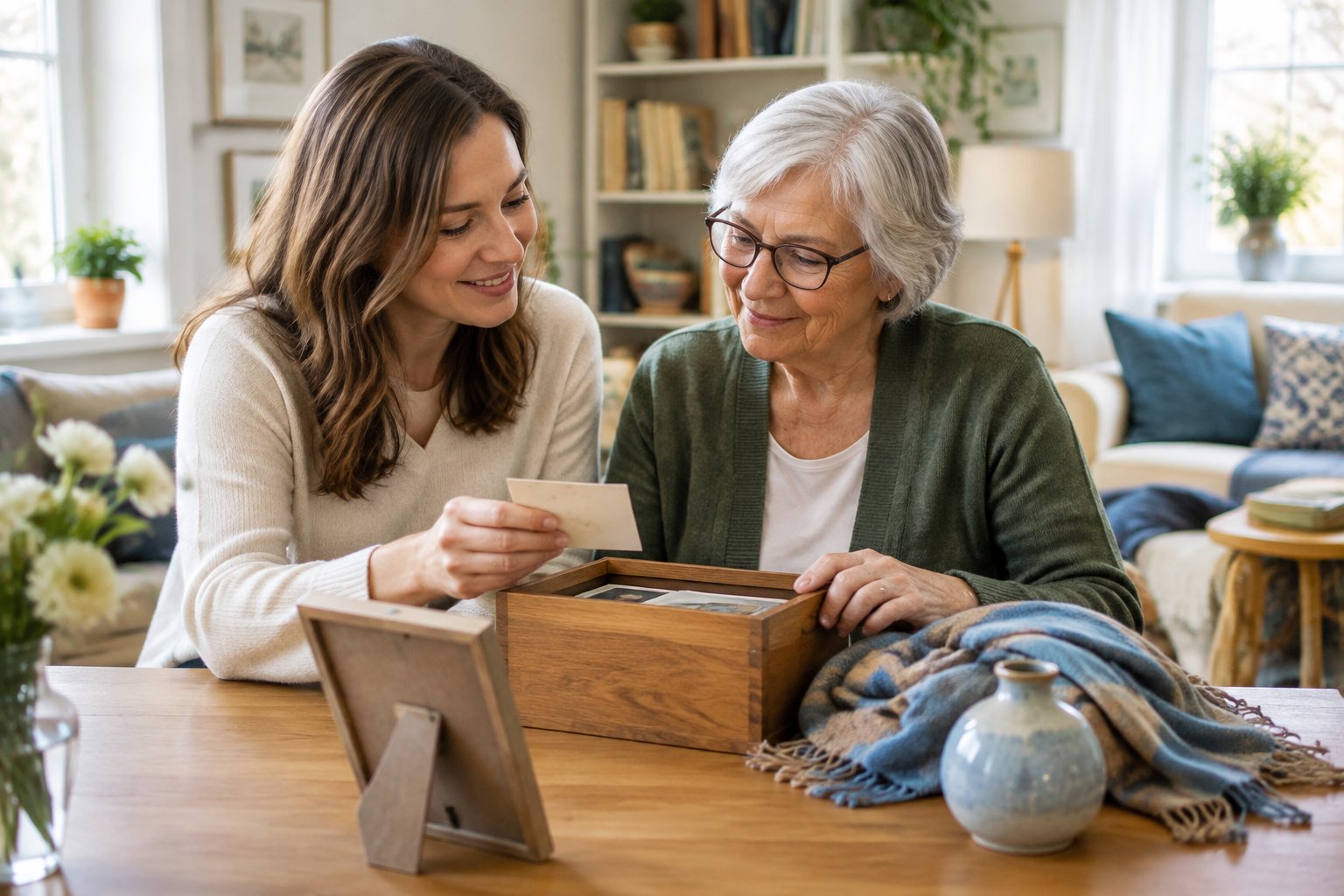
With Swedish death cleaning, you take responsibility for the decisions attached to your belongings, including the decisions someone would eventually inherit. Downsizing becomes an opportunity to explain your wishes and share meaningful possessions while you are here.
How Does It Differ from Regular Decluttering and KonMari?
With everyday decluttering methods, you might focus on clearing surfaces or making storage easier to use. With KonMari, you work through categories of belongings and consider what sparks joy.
Swedish death cleaning adds a question about the future: who will handle this, and what will they need to know? You still keep useful and cherished things, while considering their eventual destination.
You also reduce what you own before reorganizing. Moving unopened boxes onto neater shelves leaves their contents awaiting the same decisions.
Who Can Benefit, and When Can You Begin?
You have a useful starting point whenever your possessions demand more care or space than you want to give them. Retirement and downsizing provide practical openings; so does wanting your home to feel easier to manage.
If your mobility or energy has changed, decluttering in later life calls for reachable work areas and help with lifting. Your role remains choosing what happens to your belongings, even when someone else handles the boxes.
During fresh grief or a health crisis, give irreversible decisions extra time. You are allowed to organize a space and return to emotionally difficult choices later.
How Margareta Magnusson Brought the Practice to a Wider Audience
You will encounter Margareta Magnusson’s name throughout discussions of döstädning because her book helped popularize the practice internationally. The Gentle Art of Swedish Death Cleaning first appeared in Sweden in 2017, followed by its U.S. publication in 2018.
Through her personal reflections, you encounter an approach grounded in everyday possessions and conversations about their future.
You might also recognize the title from the Peacock television adaptation, which premiered in 2023. Amy Poehler narrates and executive produces the series, where participants receive hands-on help; the book offers Magnusson’s own perspective and experiences.
Core Principles for Gentle, Intentional Decluttering
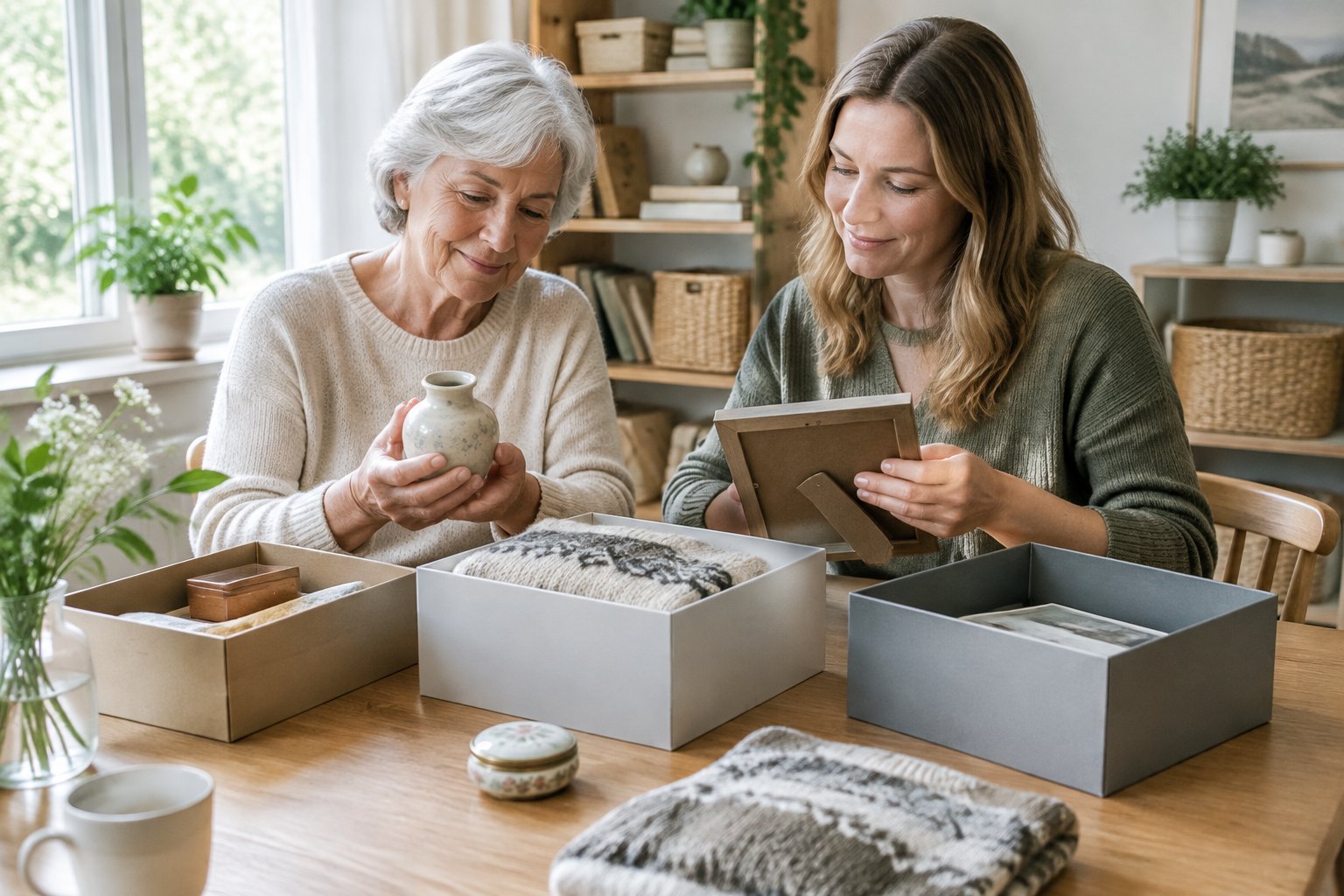
You make the process manageable by beginning with low-emotion decisions and keeping control over what leaves your home. Learning how to do Swedish death cleaning step by step helps prevent overwhelm.
A small work area and clear sorting categories provide a practical beginning for any room.
Start with Easy Decisions and Use Four Sorting Boxes
Choose a drawer or shelf whose contents feel straightforward. Unused kitchen utensils are a gentler starting point than personal letters.
You might label four boxes:
- Keep: What you use, need, or value personally.
- Give away: What a specific person has agreed to receive.
- Donate or sell: Usable belongings ready for another household.
- Recycle or discard: Items requiring appropriate recycling or disposal.
These boxes are a practical aid, with categories you are free to adapt. Keep hazardous materials separate, and leave oversized objects in place until help arrives.
As you let go of material possessions, choose an exit plan too. A donation box needs a destination and a realistic drop-off arrangement.
Ask Loved Ones What They Actually Want
Offer belongings directly, with room for an honest answer. You might ask, “Would you enjoy having this serving bowl? You are welcome to say no.”
Explain the history before someone decides. A handwritten note about who used an object gives its next owner context that its appearance alone cannot convey.
Record accepted gifts and agree on collection arrangements. If you intend to keep using something during your lifetime, make that clear so an offer creates no confusion about when ownership changes.
Avoid Rushing, Pressure, and Discarding Other People’s Things
Keep your decisions within your own belongings and your emotional capacity. For shared possessions, agree on changes together; for someone else’s property, obtain permission before sorting or removing anything.
When guilt makes letting go of sentimental clutter difficult, set the item aside with a note about the unresolved question. You might need to ask about ownership or decide whether to preserve its story.
If sorting brings intense distress, pause and seek support from someone you trust or a qualified professional. You remain entitled to privacy and time, even when others are eager to help.
A Room-by-Room Plan to Get Started
A room-by-room plan helps you finish usable areas without spreading belongings throughout your home. You can use the following Swedish death cleaning checklist during downsizing or work through it gradually while staying where you are.
Storage Areas: Begin with Unused, Nonsentimental Belongings
Look for stored items with little emotional weight, such as empty packaging or equipment for activities you have stopped doing. Choose an accessible shelf before taking on an attic or crowded garage.
Consider bulky belongings early when downsizing. An unused table requires transport arrangements, so identifying it now gives you time to organize collection.
Protect your working space. Keep exits clear, avoid lifting heavy boxes alone, and arrange suitable disposal for paint, batteries, and other hazardous materials.
Kitchens and Bathrooms: Reduce Duplicates and Unused Supplies
In your kitchen, compare duplicates with the way you cook and entertain today. Keep enough for your household’s needs, including equipment for dietary or accessibility requirements.
Match containers with their lids and check food dates. Before donating appliances, confirm that they work and include their necessary parts.
In your bathroom, review abandoned toiletries and expired products. Keep current medical supplies accessible, and use a medication take-back option where available for unwanted medicines; follow the medicine’s disposal instructions when necessary.
Bedrooms and Living Areas: Keep What Supports Daily Life
Your bedroom is a useful place to consider comfort and access. A closet clean-out helps you identify clothing that fits your body and your current routines, while keeping seasonal or special-purpose pieces you still need.
In living areas, look at furniture placement and everyday use. Leave comfortable routes through the room, especially around frequently used seating.
You can also sort books you no longer want to keep. Keep the titles you value, and check donation acceptance rules before packing the rest.
A Simple Checklist for Completing Each Space
Treat a space as complete when you have resolved its immediate decisions and arranged for outgoing items to leave. Your checklist might look like this:
- Choose a bounded area, such as one cabinet.
- Separate your property from shared or borrowed belongings.
- Sort using your four boxes.
- Record any promised gifts and collection details.
- Arrange donation, sale, recycling, or disposal.
- Return retained items to accessible places.
- Note difficult decisions for a later session.
- Clear the floor and walking routes before stopping.
For lasting home organization, give retained belongings places you can reach and remember. Finish the shelf you opened before emptying another cabinet.
Handling Private Belongings and Future Wishes
You leave clearer instructions when you address sentimental possessions, private material, and essential records separately. Each needs its own level of care, especially where personal wishes intersect with legal responsibilities.
Save Photos and Sentimental Keepsakes for Later
Leave photographs and deeply personal objects until you have practiced making easier decisions. A letter requires a different kind of attention from a spare measuring cup.
When you reach these belongings, work in small groups. Label important photographs with names and approximate dates, and record the stories you want others to retain.
As you declutter sentimental items, consider photographs or scans of objects you are ready to release. Keep original documents when their legal or historical significance requires it, and back up digital copies you value.
Use a Throw-Away Box for Private Items You Still Want
You can reserve a “throw-away box” for personal belongings you wish to keep during your lifetime but would prefer others to discard after your death. Magnusson describes this approach for items whose meaning belongs primarily to their owner.
Label your wishes clearly and discuss the arrangement with a trusted person. Include only material that carries no estate, financial, or legal responsibility.
A label expresses a request; it cannot guarantee privacy or override legal duties. If you need certainty that particular private material will remain unread, consider securely destroying it yourself when you feel ready.
Organize Important Documents and Explain Your Wishes
Create a secure record of essential documents and tell the appropriate person how to locate it. Include information about your will, insurance, financial accounts, property records, and relevant professional contacts.
For digital accounts, use secure access arrangements, such as a password manager’s emergency-access feature where available. Keep passwords out of an openly accessible household binder.
Distinguish household instructions from legally effective estate planning. A note explaining who you hope will receive an heirloom might help your family, but legal effect depends on your state’s rules and properly prepared documents.
Coordinate end-of-life planning with appropriate professionals. Your healthcare wishes and authority for financial decisions require separate attention from sorting possessions.
Leaving Clarity, Not Chaos
You bring Swedish death cleaning into daily life by keeping belongings manageable and making their future easier to understand. Your useful takeaways are straightforward:
- Keep possessions that support your life or hold personal meaning.
- Ask before passing belongings to someone else.
- Leave clear instructions and legally appropriate documents.
Through intentional daily habits, you also limit the need to repeat large sorting projects. Mindful consumption means checking what you already own and considering the care a purchase will require.
Viewers who watched the series on Peacock often notice how honest communication eases the emotional weight of decluttering. Embracing the gentle art of Swedish death cleaning allows you to reflect while lightening the load on those you love.
When you finish a session, leave the space usable and write down any unresolved decision. That gives you a clear place to resume without reopening every box.
Frequently Asked Questions
Swedish death cleaning gives you a flexible framework for decluttering decisions across different stages of life. You can adapt its practical tools to your household while preserving your own boundaries.
What age should you start Swedish death cleaning?
You can begin Swedish death cleaning at any adult age when the approach feels useful. Magnusson suggested beginning around age 65, but you need no age threshold to organize possessions and clarify your wishes.
How long does it take, and how do you maintain momentum?
Understanding how to do Swedish death cleaning sustainably means treating it as an ongoing routine rather than a weekend sprint.
You set the timeline, and the process has no fixed completion date. When considering how long decluttering a house takes, account for the volume of belongings, your available energy, and the arrangements needed to move items out.
What if my family does not want my belongings?
You can offer unwanted belongings to friends, sell them, or donate them where they are accepted. Your family’s decision reflects their own space and preferences; you are still free to keep something you enjoy using.
What is the red dot system in Swedish death cleaning?
You use red stickers to identify items selected to leave and green stickers for items you intend to keep; yellow stickers can mark undecided belongings. Agree on the colors with anyone helping, and use removable labels that will protect delicate finishes.
Can you practice Swedish death cleaning without becoming a minimalist?
You can practice Swedish death cleaning while keeping collections, decorations, and other belongings you enjoy. Focus on making deliberate decisions and explaining what should happen to your possessions, with room in your home for what you choose to retain.