
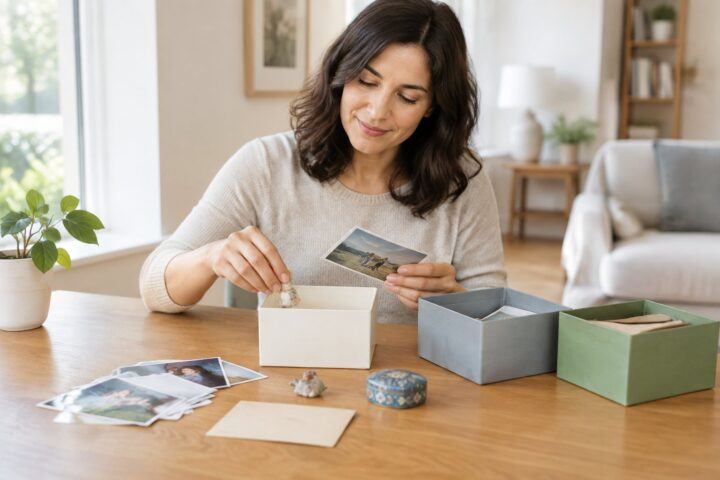
Your hardest decisions about keepsakes involve the people and memories attached to them. To declutter sentimental items gently, keep your most meaningful pieces, photograph the belongings you’re ready to release, and record their stories before passing them on. Give yourself permission to pause when grief makes a decision feel premature.
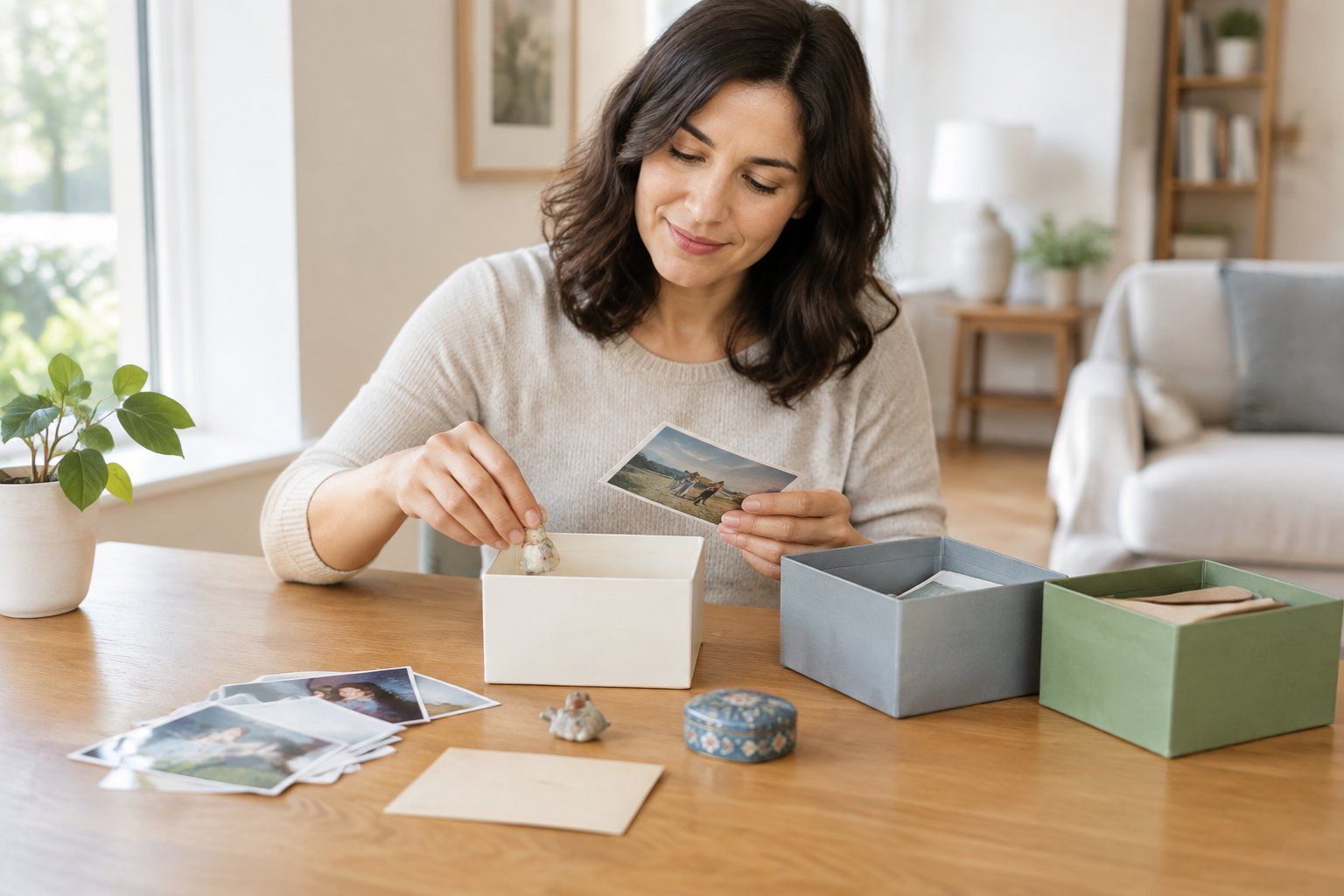
You deserve space to enjoy your home while staying connected to your past. Sentimental clutter becomes easier to sort when you give each decision a small scope and a clear next step.
Sentimental decluttering is not about erasing your history, but honoring what matters most. Begin with a manageable box and let your first session be practice.
Table of Contents
Why Does Letting Go of Sentimental Items Feel Like Losing Someone?
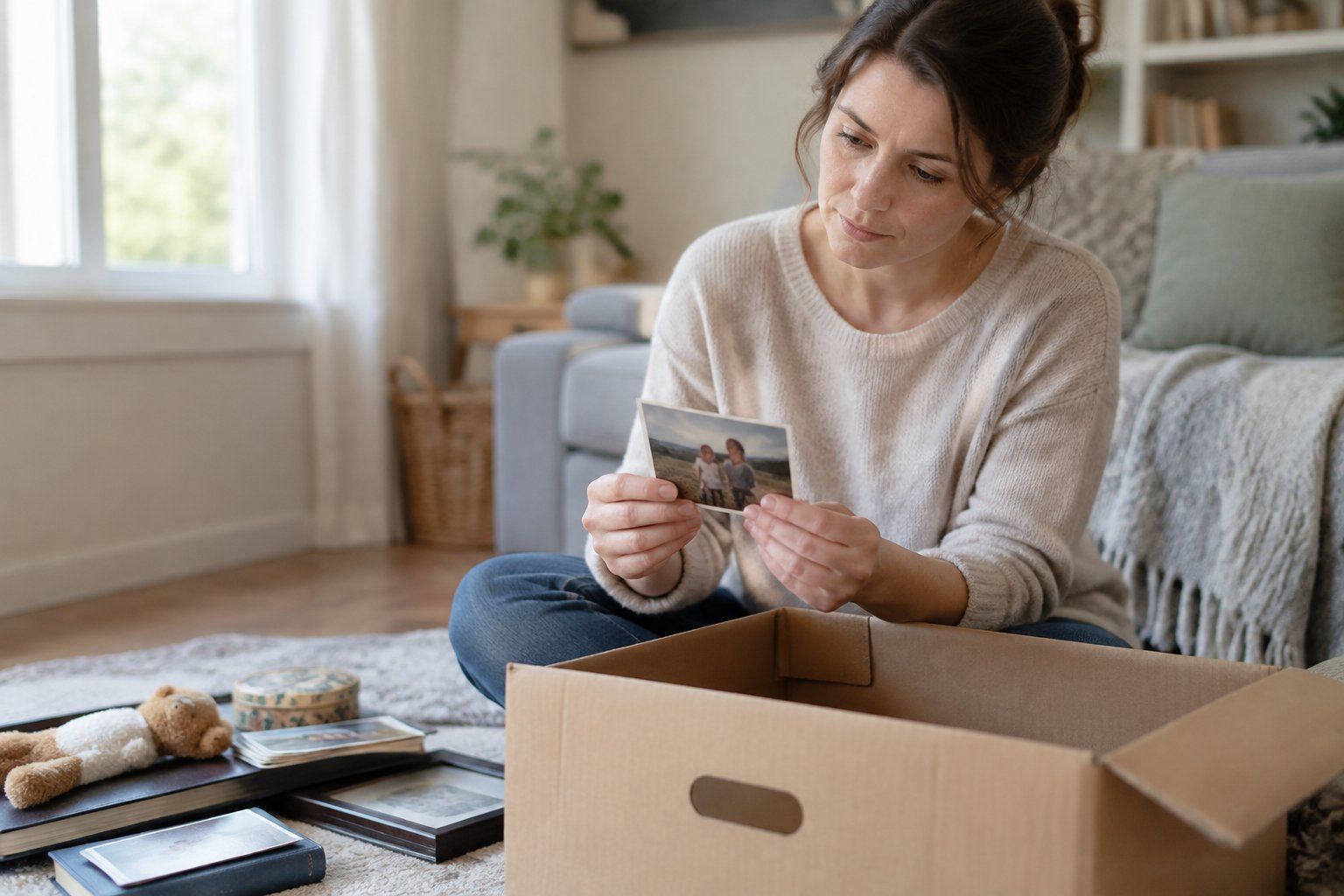
Your emotional attachment to sentimental items comes from the relationships and experiences you connect with them. Holding a familiar object brings those connections close, so deciding its future deserves care.
Separate the Object From the Person or Memory
Before choosing whether to keep something, name what it brings back. With a mixing bowl, you might remember baking beside your grandmother. With a school sweatshirt, you might remember the confidence you gained during those years.
Ask yourself which part you want to preserve: the object’s feel, someone’s handwriting, or a particular story. As you practice letting go of sentimental clutter, give yourself several ways to maintain that connection, including using a family recipe or sharing a memory aloud.
Recognize the Difference Between Guilt and Grief
Decluttering sentimental items often brings complex emotions to the surface. Guilt sounds like an obligation, such as keeping a gift just because someone chose it for you. Grief feels connected to missing someone or longing for a time you cannot revisit.
You might feel both at once. Practice noticing your current emotions before making a permanent choice. If handling an item brings intense sadness, put it safely away and choose an easier category; you have permission to return when you feel steadier.
Set Gentle Boundaries Before You Start
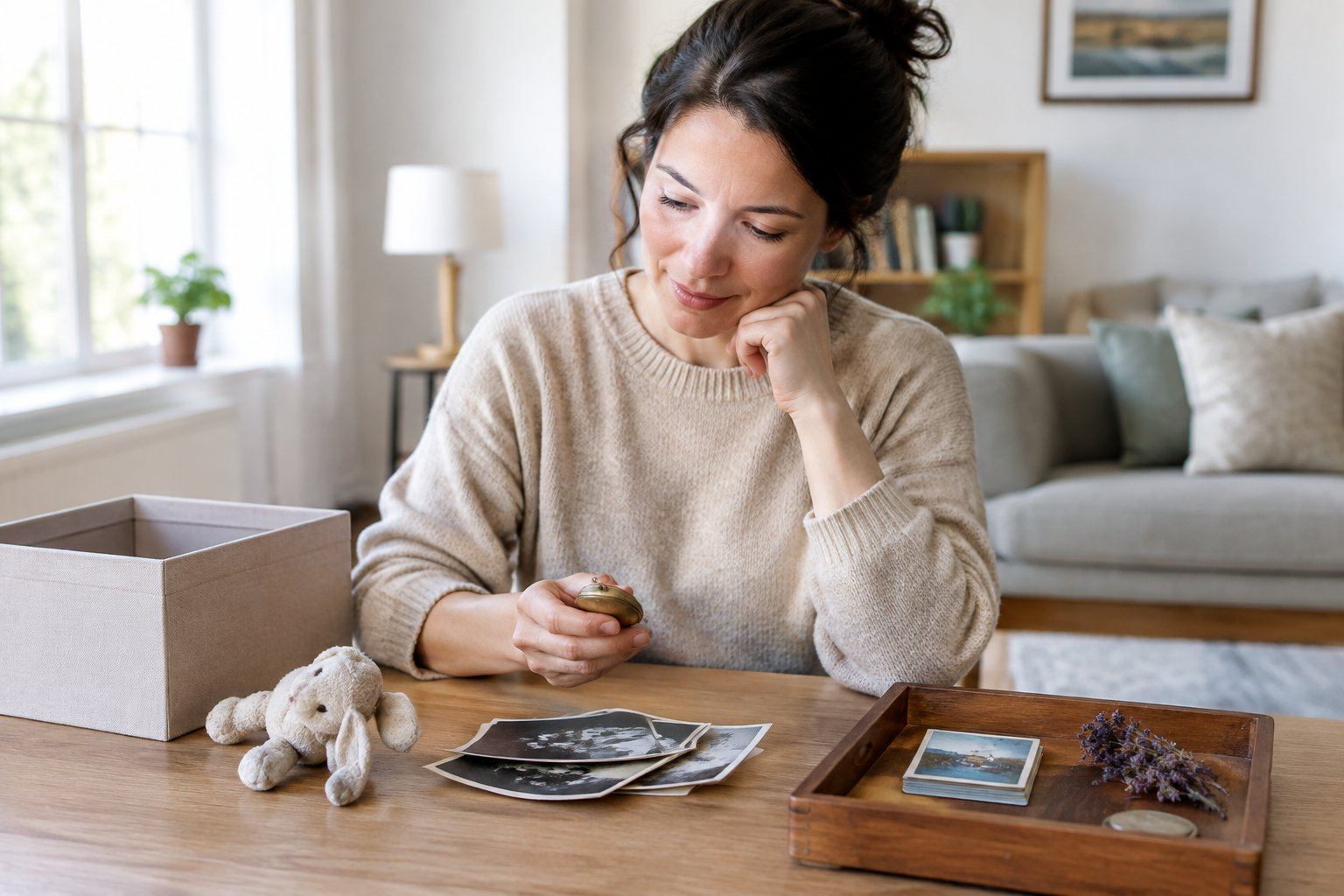
Organizers like Marie Kondo often recommend saving keepsakes for last because emotional attachment makes them the hardest to evaluate. When you are ready, decluttering sentimental items becomes easier with a small workspace, a realistic storage limit, and a stopping time. These boundaries keep the work contained and give you fewer decisions to juggle.
Start With One Small Box, Not an Entire Room
Choose a box you can lift and sort on a clear table. Begin with lower-stakes belongings, such as duplicate event programs or souvenirs whose meaning has faded. Save the most emotionally charged letters or inherited belongings for a steadier day.
If you’re learning how to declutter sentimental items while also decluttering a room, keep the projects separate. Leave furniture and everyday storage alone during this session so you have somewhere clear to finish.
Choose a Keepsake Limit That Fits Your Space
Try one memory box as a starting point, with separate space for anything you display. Choose a box that fits an accessible shelf without crowding the belongings you use each day. Place your favorites inside first.
Treat that limit as a flexible default. A garment needs different storage from a letter, and your household might need separate collections. When you downsize without moving, use the space you have now to set a practical boundary.
Work for 30 Minutes and Avoid a Permanent Maybe Pile
Set a timer for 30 minutes and stop sooner if you feel overwhelmed. Repeatedly reconsidering the same objects invites decision fatigue. Give each item a next step: keep, photograph and release, offer, donate, or dispose of responsibly.
For unresolved choices, place hesitant items into a temporary maybe box labeled with a specific review date on your calendar. When that date arrives, open the maybe box and identify what you need to decide. Keep grief-related pauses separate from an open-ended pile of postponed chores.
Preserve the Story Without Keeping Every Object
You can preserve the meaning of keepsakes through photographs and written memories while choosing a smaller physical collection. Decluttering sentimental items feels far less daunting when you know the memories will not disappear with the objects. Keep the process simple enough to finish during your sorting sessions.
Photograph Each Item With Its Name, Date, and Story
Photograph each item you plan to release individually in good natural light. Use a plain background and include details such as an inscription, worn handle, or handwritten message. Check that the image is sharp before moving on.
Add the owner’s name, the date or approximate period, and why you kept it. Mark uncertain details as approximate. If writing feels difficult, use a short journaling prompt: “You would want to remember this because…” Then finish the thought in your own words.
Create One Organized Digital Album and Back It Up
Choose one album for your keepsake photographs and give its folders clear names by person or occasion. Keep each story beside its image in a caption or matching text file. Use file names you will recognize later.
Before releasing anything irreplaceable, open the saved files and check that the details are readable. Keep a backup in a separate location, such as an external drive or a cloud backup service. Check whether deleting an image from your phone also deletes it from synced storage.
Choose One Representative Keepsake per Person or Memory
Try selecting one item that brings a person or experience to mind with little explanation. You might choose a holiday ornament from a larger collection or a letter with a message you still enjoy reading.
Use this as a starting point, with room for exceptions. While decluttering sentimental items, compare similar pieces together so you can see which ones hold distinct meaning. As you let go of material possessions, keep an additional piece when it carries a separate story you want to revisit.
Display Favorites and Store Delicate Pieces in a Memory Box
Give suitable favorites a place in your daily life. Frame a copy of a letter, hang an ornament during its season, or display a sturdy keepsake where you will see it. Choose a location away from direct sunlight.
For fragile originals, use appropriate protective materials, such as acid-free folders for paper. Store delicate garments clean and dry with gentle support for folds. Label your memory box and keep it in a stable indoor space where you can reach it without unpacking a closet.
Give the Remaining Items a Thoughtful Next Home
Complete your decisions by choosing where outgoing belongings will go and arranging their departure. Clear family boundaries help you pass things on without creating new obligations.
Offer Family Heirlooms Once With a Clear Deadline
For family heirlooms you own and have the right to give away, send relatives a photograph and a brief description. Ask whether anyone wants the item, then agree on a reply and pickup deadline. Explain what you plan to do if nobody accepts.
If a relative objects, acknowledge their attachment and offer a practical choice: they can take responsibility for the item or help record its story. Give shared property and unsettled estate belongings separate attention before making any decluttering decisions.
Donate Usable Items and Recycle What You Can
Check an organization’s current acceptance rules before packing donations. Offer goods that are clean, safe, and usable. Confirm interest before taking unusual collections or historical materials to a museum or local archive.
For damaged items, check your local recycling program’s rules. Mixed materials, glitter-covered artwork, and coated paper need special attention because acceptance varies. As you reduce what you own, attach a destination to each outgoing bag and arrange the drop-off while the decision is fresh.
Let Children Help Choose Artwork and Keepsakes
Invite your children to select favorites for a rotating display. Give them a defined place, such as a frame or art ledge, and let them explain what they like about each piece. Write down their words when the story adds meaning.
At each change, let them choose what goes into their keepsake space and what gets photographed or released. Ask before discarding personal treasures. If you want to keep something they have outgrown, store it within your own keepsake limit.
Use a Simple Goodbye Ritual to Mark the Decision
Letting go of sentimental clutter is an emotional journey as much as a physical one. Give yourself a brief moment to acknowledge an item before it leaves. You might read its message aloud, share its story with someone, or take a final photograph.
Try these words: “Thank you for reminding me of ___. I can carry that story without keeping this.” Use a moment of reflection to notice how you feel, then place the item with its chosen donation or pickup group.
Keep the Story, Not the Box
You make progress by preserving meaningful stories and completing a manageable set of decisions. Keep your chosen sentimental keepsakes accessible, protect delicate pieces, and follow through on the destinations you selected.
As you reduce sentimental clutter, give yourself room to pause without losing your next step. Decluttering sentimental items is a gradual journey rather than a race. Choose a box for your next session and put its review date on your calendar.
You can carry that same intention into simpler daily routines, beginning with a clear place to put incoming papers and gifts.
Frequently Asked Questions
Your questions about sentimental items deserve practical answers that leave you in charge of your belongings. Use these situations to decide where you need an extra safeguard or outside support.
What are examples of sentimental items?
When you set out to declutter sentimental items, you might encounter inherited jewelry, birthday cards, childhood toys, family artwork, travel souvenirs, or clothing tied to a milestone. You recognize them by the personal meaning they hold, even when their everyday use has ended.
What if I regret letting something go?
If regret follows a decision, use your saved photograph or written story to reconnect with what you valued about the item. Allow yourself some sadness, and use what you learn to adjust future decisions, especially when considering an irreplaceable original.
How do I handle belongings from someone who has died?
Understanding how to declutter sentimental items after a loss requires extra patience and grace. Begin with urgent responsibilities, such as securing the home and locating important documents, while giving personal keepsakes a slower timeline. Confirm who has legal authority over estate belongings before distributing them, and invite a trusted person to sit with you if sorting feels too difficult.
Should children decide which keepsakes to keep?
Give your children an age-appropriate say in their own keepsakes while you set safe storage boundaries. For younger children, offer a few clear choices at a time; let older children manage a defined keepsake space with your support.
When should I ask a professional organizer for help?
Ask a professional organizer for help when you need hands-on sorting support or face a move with a firm deadline. Before booking, ask how they handle emotional attachment, privacy, and consent, including whether every disposal decision stays with you. If distress disrupts your daily life or keeps rooms unusable, seek support from a licensed mental health professional as well.