

To air-dry clothes in your apartment without crowding your living space, use a folding rack in an open, ventilated spot, leave gaps between garments, and remove moisture with ventilation or a dehumidifier. Knowing how to air dry clothes effectively starts with well-spun laundry and steady air circulation.
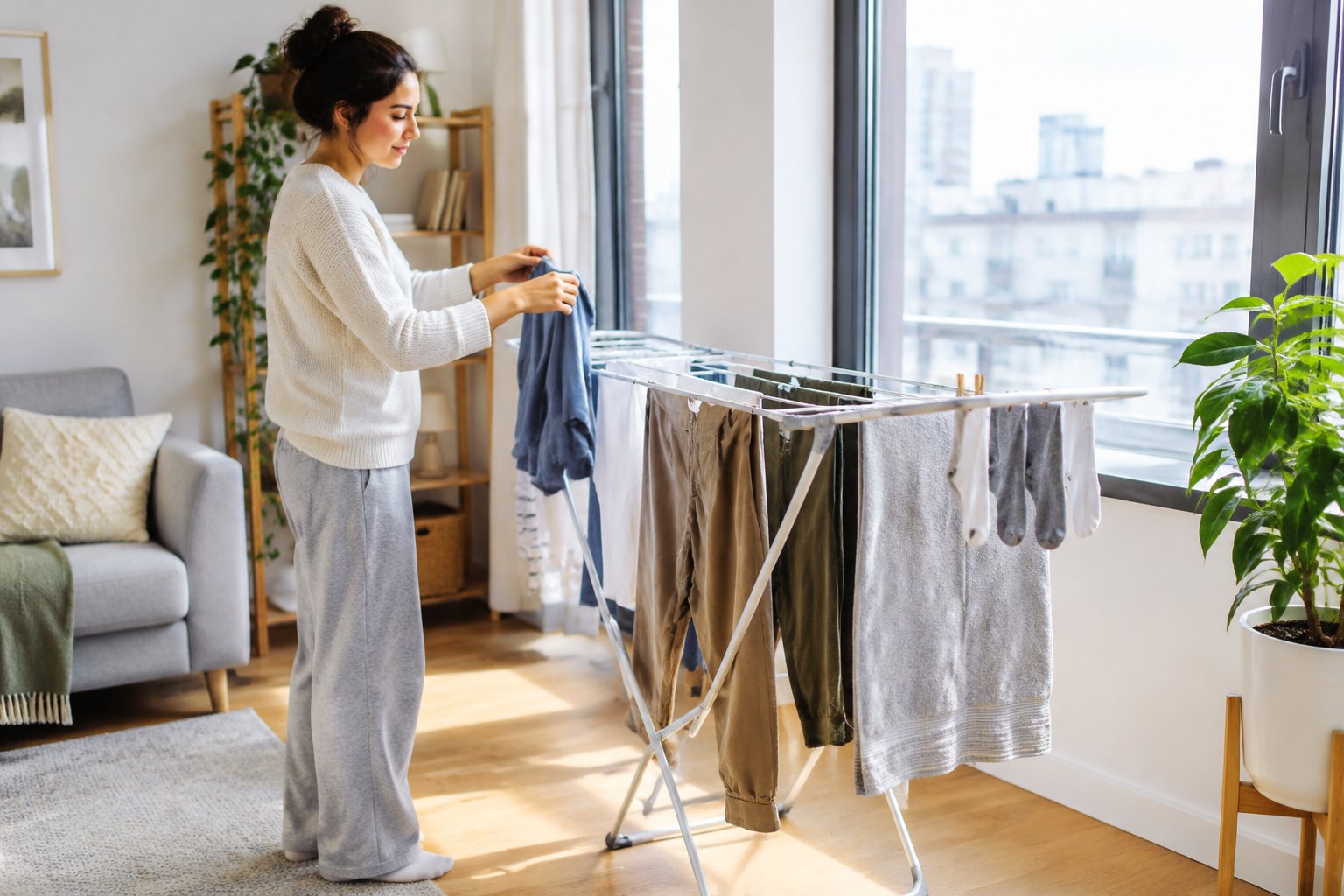
You deserve room to relax while your laundry dries. Air drying clothes in an apartment works best when you give your setup a temporary home and keep loads within its capacity.
Mastering how to air dry clothes in apartment spaces helps prevent clutter. With a manageable small apartment laundry routine, drying clothes in an apartment keeps damp fabric off furniture and reclaims floor space between wash days.
Table of Contents
Prepare and Space Laundry for Faster Drying
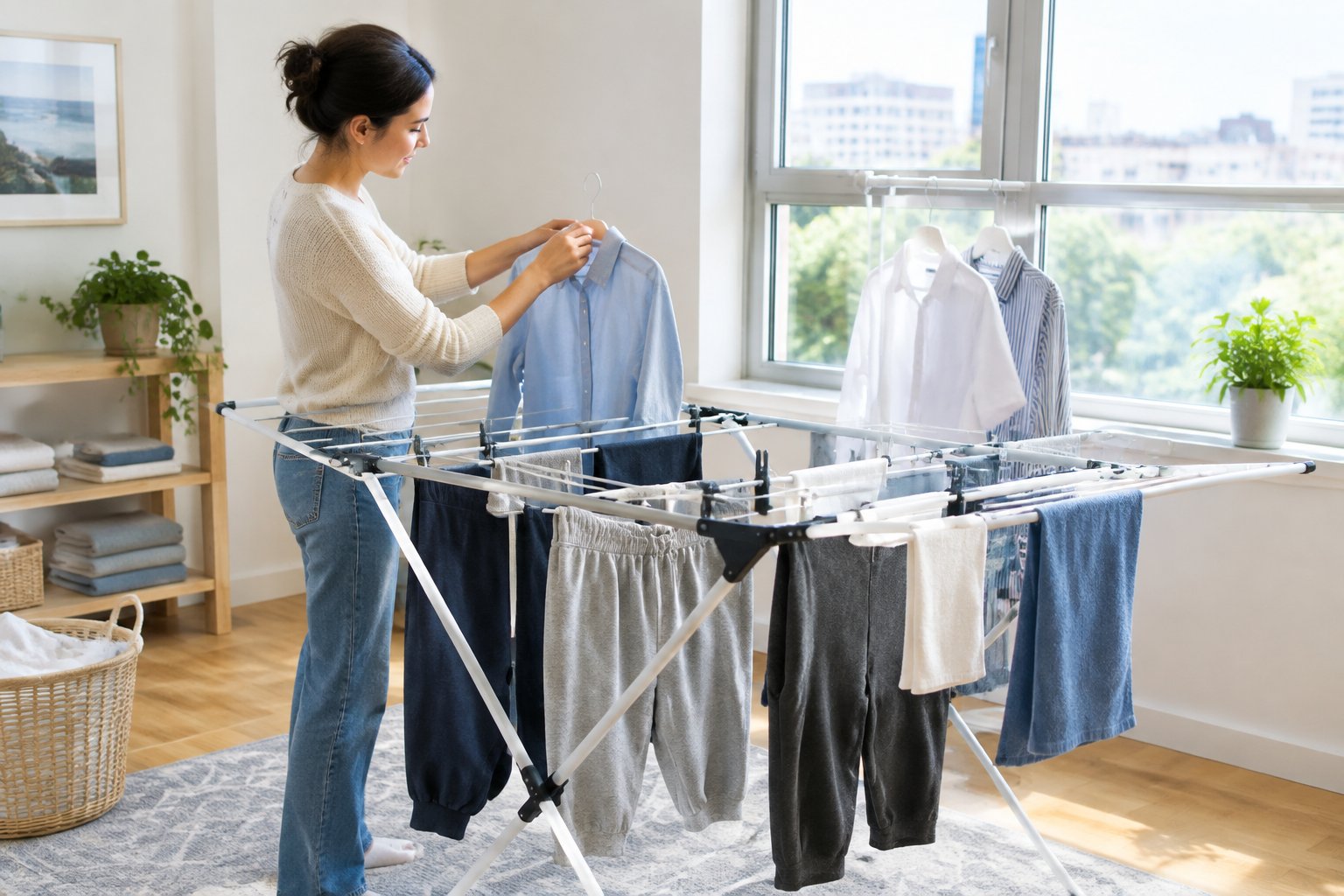
You speed up air-drying laundry by removing excess water before hanging and exposing as much fabric as possible to moving air. Efficient air-drying clothes requires good airflow and proper fabric prep.
Follow each garment’s care label, especially when choosing a spin setting or drying position. Mastering how to air dry clothes without wrinkles or trapped moisture begins before items even leave the wash drum.
Check Care Labels and Remove Excess Water
Check for instructions such as “line dry,” “dry flat,” or “dry in shade.” If your washer and garment instructions allow it, run an extra spin cycle to remove excess water before unloading.
For hand-washed clothing, press water out gently. Place delicate pieces on a clean, dry towel, roll the towel around them, and press without twisting. Unroll promptly so your clothes enter the drying stage damp, with no dripping water.
Shake Out Garments and Leave Gaps Between Items
Give each garment a shake, then straighten sleeves and unfold rolled hems. Pull pockets open where possible so wet layers do not stay pressed together.
Leave visible gaps between items on your rack. If neighboring pieces touch along their length, move something to another drying surface or reduce the load. Check underneath larger garments, where small items easily disappear behind wet fabric.
Hang Shirts, Spread Towels, and Lay Knits Flat
Use smooth, rust-free clothes hangers for woven shirts that permit hanging. Choose hangers that support the shoulders without stretching them, and leave the shirts loosely open.
Spread towels across separate bars with their layers held apart. For sweaters marked “dry flat,” reshape them on a mesh surface or a dry towel supported by a moisture-safe surface. Replace a damp towel beneath a knit, and turn the garment carefully once its shape is stable.
Where Can You Dry Laundry Without Losing Living Space?
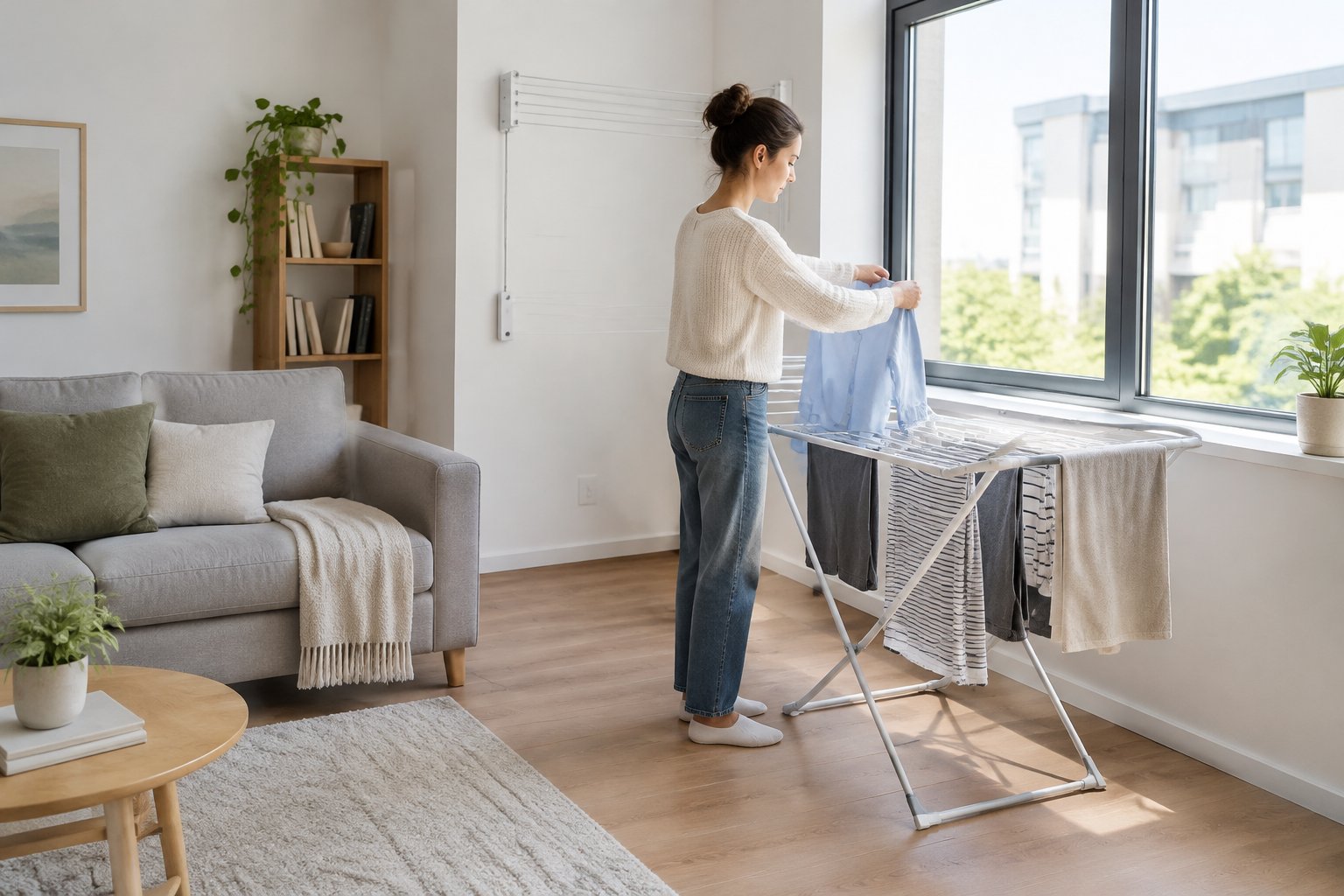
Your most useful drying spot is an open area that keeps walkways clear and lets you remove moisture from the room. Give your drying rack enough space to work without blocking everyday access.
Choose an Open Spot Away From Walkways and Damp Corners
Look for a place beside a window or within reach of an exhaust fan. Keep exits, door swings, and access to your bed clear, and leave space between wet laundry and the wall.
Avoid corners that already feel damp or show condensation. If your bedroom is the only option, keep the rack away from bedding and upholstered furniture. Your small-bedroom layout still needs a clear route around the bed while clothes dry.
Use a Folding Rack That Stores Away Easily
Choose a foldable drying rack by its open footprint and its folded shape. Check where its feet will sit, how far its wings extend, and whether you have somewhere accessible to store it afterward.
A folding drying rack is easier to live with when its storage spot is close to your laundry area. Apply the same approach you use with furniture in a studio apartment: account for the space each piece needs while you use it.
Use Existing Rods or a Retractable Line Safely
Sturdy laundry rods in a closet or doorway provide great vertical hanging space. Use existing laundry rods only when they are secure and rated for the weight of wet clothing. Treat a tension-mounted shower rod cautiously, since a heavy load risks pulling it loose.
Installing an indoor clothesline can expand your capacity when floor space is tight. For a retractable clothesline, follow the mounting instructions and load limit, and check your lease before drilling.
Position the clothesline or retractable clothesline so nobody walks into it. Keep laundry off sprinkler pipes, curtain rods, and electrical fixtures, and keep all drying setups clear of heaters.
Keep Wall-Mounted and Concealed Drying Spaces Well Ventilated
A wall-mounted rack frees up floor space, but you still need clearance around the clothes. Check that its extended arms leave room to pass and that garments hang clear of the wall.
If you use a purpose-built drawer dryer or pull-out drying shelf, follow its ventilation instructions. Keep damp clothing out of ordinary closed drawers and closets. Reserve your enclosed storage bins for fully dry items so moisture stays out of stored fabrics.
Control Airflow and Humidity to Prevent Dampness
Your laundry dries more reliably when you move air across the fabric and give the released moisture somewhere to go. Watch the room as well as the clothes, especially during humid weather.
When Should You Open a Window or Run an Exhaust Fan?
Open a window when outdoor conditions help carry indoor moisture away. Cool outdoor air may still help after it enters and warms up; hot, muggy air offers less drying benefit.
In a bathroom, use an exhaust fan that vents outdoors and leave an air path through the doorway. After a shower, clear the steam before adding wet laundry. Keep windows closed when rain would reach your clothes or outdoor air quality is poor.
What Is the Difference Between a Fan and a Dehumidifier?
Use a fan to move air across your laundry and carry humid air away from the fabric surface. A fan alone leaves that moisture inside the apartment unless you also ventilate or remove it.
Use a dehumidifier when your indoor air stays damp. Elevated indoor humidity slows evaporation and risks musty smells, so extracting that water is essential when drying clothes indoors.
A dehumidifier collects water from the air, keeping indoor humidity at a comfortable level. Follow its clearance instructions, empty its tank as needed, and keep the appliance and its cord away from dripping clothes.
Watch for Condensation and Persistent Musty Smells
Check nearby windows and cold walls while your laundry dries. New condensation signals that moisture is building up on those surfaces, so reduce the amount of wet laundry and improve moisture removal.
A small humidity meter helps you track whether laundry leaves the room persistently damper. If you notice recurring mold, peeling paint, or a musty smell after the clothes are gone, report the problem to your landlord. Keep laundry away from the affected area while the cause is addressed.
Allow Extra Time for Thick Fabrics and Check Hidden Seams
Give heavy cotton and layered garments more drying time than lightweight tops. Turn jeans partway through drying and open pockets so the lining gets air.
Before folding, press your fingers against waistbands, cuffs, underarms, and thick seams. If a spot feels damp or noticeably cooler than the surrounding dry fabric, leave the item out and check again later. Avoid judging a whole garment by its exposed surface.
Keep Laundry Manageable Between Wash Days
You keep air drying clothes manageable by matching each wash to your drying capacity and clearing finished items promptly. Effective drying clothes indoors depends on balancing load size with room airflow.
Build that limit into your routine before the washer starts. Successful drying clothes in an apartment comes down to planning your space in advance.
Match Load Size to Available Drying Space
Set up your empty rack before loading the washer. Picture where each bulky item will go, including anything that needs to lie flat, and stop before you fill every available gap.
Separate towels from everyday clothing when drying them together would overcrowd the rack. If you are simplifying your daily routines, choose wash days that leave time to hang laundry promptly. Wet clothes waiting in the washer add another delay.
Put Fully Dry Clothes Away and Store the Drying Setup
Remove dry lightweight pieces while thicker items finish. That frees airflow around the remaining laundry and keeps the rack from becoming a second closet.
Give hangers and clips a nearby home using storage that fits your available space. Once the rack is empty, wipe off any moisture and let it dry before folding it away. A clear return spot supports minimalist home organization without adding another daily sorting task.
When Does a Backup Dryer Make More Sense?
Use a shared clothes dryer or laundromat for bulky bedding when it exceeds your safe drying space. A tumble dryer also helps when persistent humidity prevents timely drying, provided the fabric’s care label permits it.
If you are considering a compact dryer, check its venting, electrical needs, and lease requirements. Your options for washers and dryers in apartments without hookups still require a suitable installation plan. For any portable clothes dryer, confirm how it handles moisture, since some designs release warm, humid air into the room.
Make Room for Laundry Without Letting It Take Over
You keep your living space usable with a temporary drying area, manageable loads, and a clear place to store the setup afterward. Your small apartment laundry routine should leave enough room to move comfortably while clothes finish drying.
Keep using the space and equipment that work for your home. If you are trying to live with less, use your current hangers and a safe drying surface before adding more equipment. Between loads, check hidden seams, put dry clothing away, and return the rack to its storage spot.
Frequently Asked Questions
You can handle most indoor drying problems by checking fabric care and adjusting how you manage moisture. These answers cover common concerns about drying clothes indoors.
Is it safe to air-dry clothes indoors?
You can air-dry clothes indoors safely when you keep moisture from building up and maintain clear space around the setup. If your apartment already has dampness or mold, address that problem and use another drying location in the meantime.
Can I air-dry clothes in my apartment overnight?
You can leave clothes air-drying overnight on a stable rack positioned clear of exits and heat sources. Allow extra time for heavy fabrics, and only run a fan or dehumidifier unattended when its instructions permit that use.
How can I air-dry clothes without a drying rack?
You can use clothes hangers on securely mounted laundry rods or set up an indoor clothesline. Air-drying clothes this way keeps items off furniture while preserving usable floor space.
For garments labeled “dry flat,” use a clean towel on a moisture-safe surface and replace the towel when it becomes damp.
How do I stop air-dried clothes from feeling stiff?
Use the detergent amount directed for your load and water conditions, then shake garments before hanging and after drying. If you notice soap residue, rinse again; for dryer-safe towels, a brief tumble after air-drying helps loosen the fabric.
Why do my clothes smell musty after drying indoors?
Your clothes may smell musty because they stayed damp too long or retained odor from the wash. Rewash affected items, clean your washer as its manual directs, and hang the next load promptly with enough space for air to pass between garments.