
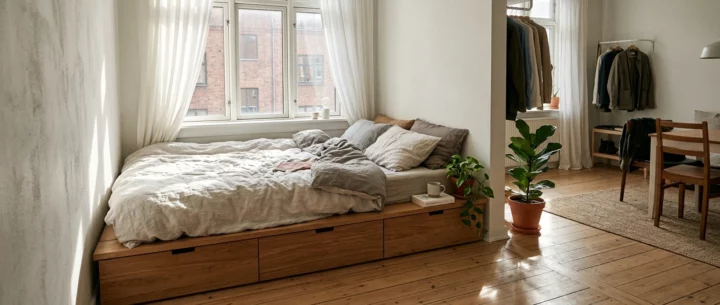
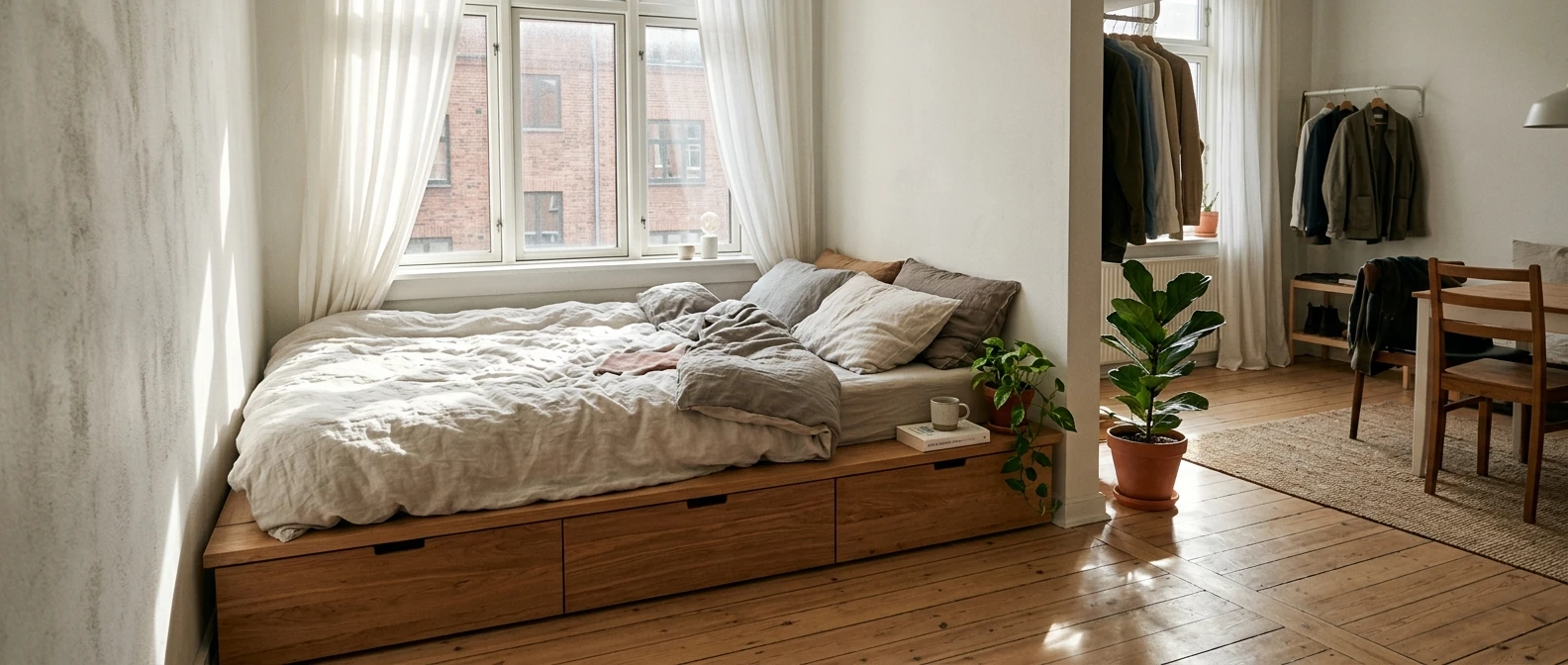
Furnishing 300 square feet is a different problem than furnishing a two-bedroom apartment and shopping the same way for both is how people end up with a studio that feels like a furniture showroom. Every piece in a small space has to answer for the square footage it occupies, not just the job it does. A piece that does one thing, however well, is taking up room that a piece doing three things could use instead.
This matters more in a studio than anywhere else because there’s no hallway closet to hide the overflow and no guest room to absorb the chair nobody sits in. What follows is a short list of furniture categories worth owning in a studio apartment, chosen for what they do, how long they last, and how much floor they take up to do it.
Table of Contents
What makes furniture worth owning in 300 square feet
The test for any piece in a studio isn’t whether it’s attractive or even whether it’s comfortable. It’s whether it earns its footprint across more than one function, more than one time of day, or more than one use case.
A reading chair that’s only a reading chair has to justify, on its own, the three or four square feet it sits on permanently. A storage bench that’s a reading chair and a place to put winter blankets justifies the same footprint twice over. In a studio, that math applies to everything: a dining table, a side table, a bed frame, a shelf.
Durability matters here more than in a larger home too, because replacing a piece in a studio means moving it out through the same single door and front room everything else has to pass through. Buying once, and buying for the long haul, isn’t a minimalist preference in this context. It’s the practical choice.
The bed that works harder than a bed frame
A bed takes up more floor space than anything else in a studio, which makes it the single highest-leverage purchase in the room. A platform bed with drawers built into the base turns that square footage into storage instead of dead space underneath, and it does it without adding a dresser.
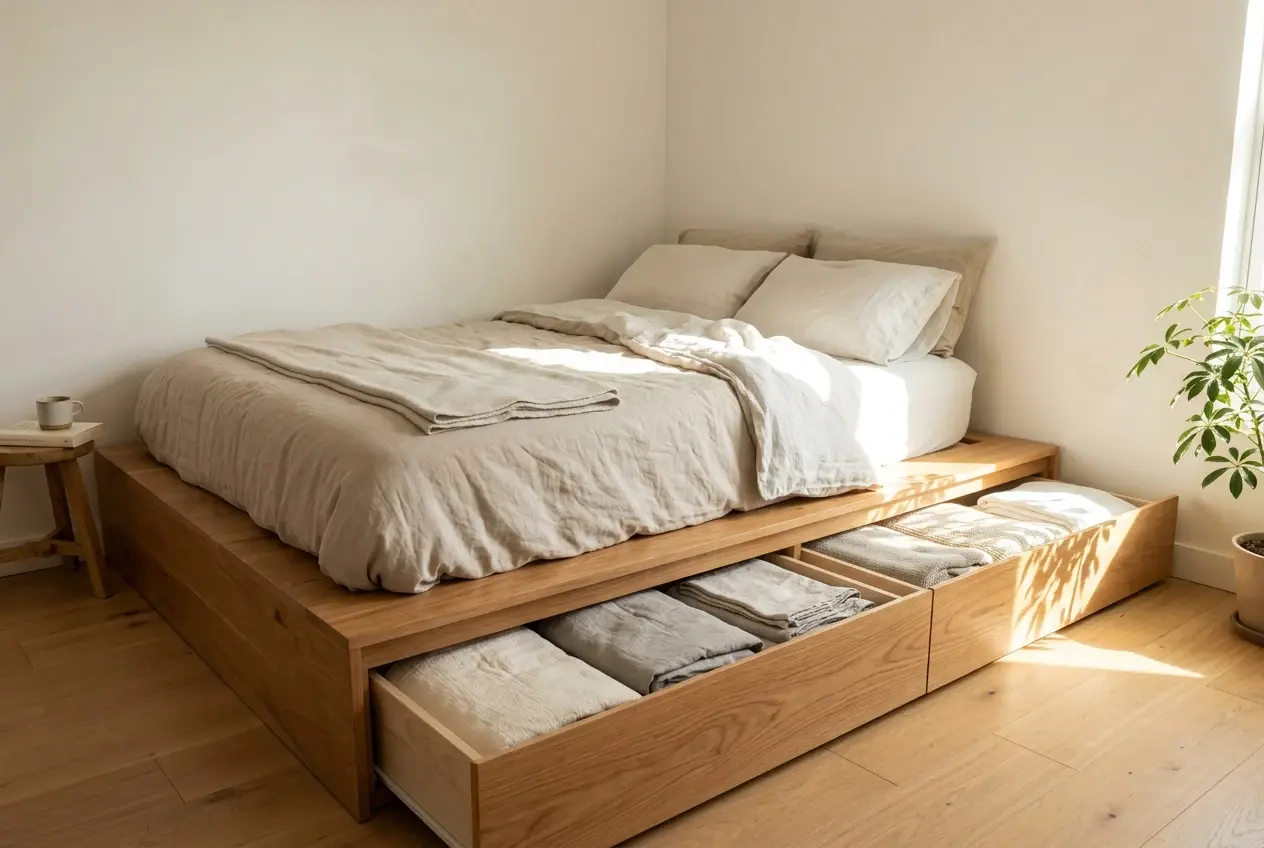
A bed that converts, like a wall bed or a daybed that reads as seating during the day, goes further still. It gives the square footage back entirely when it’s not in use, which matters in a studio where the sleeping area and the living area are often the same six feet of floor.
What doesn’t belong in a studio is a bed frame chosen only for how it looks, with a separate dresser and nightstand bought to match it. That’s three purchases solving one problem. One bed with storage built in solves it with a single piece, and a single delivery.
A table that becomes four different tables
A studio rarely has room for a dedicated dining table, a desk, a coffee table, and a side table, and it doesn’t need all four as separate objects. A single extendable or drop-leaf table can serve as a compact side table most of the time and expand to seat two or four when it needs to.
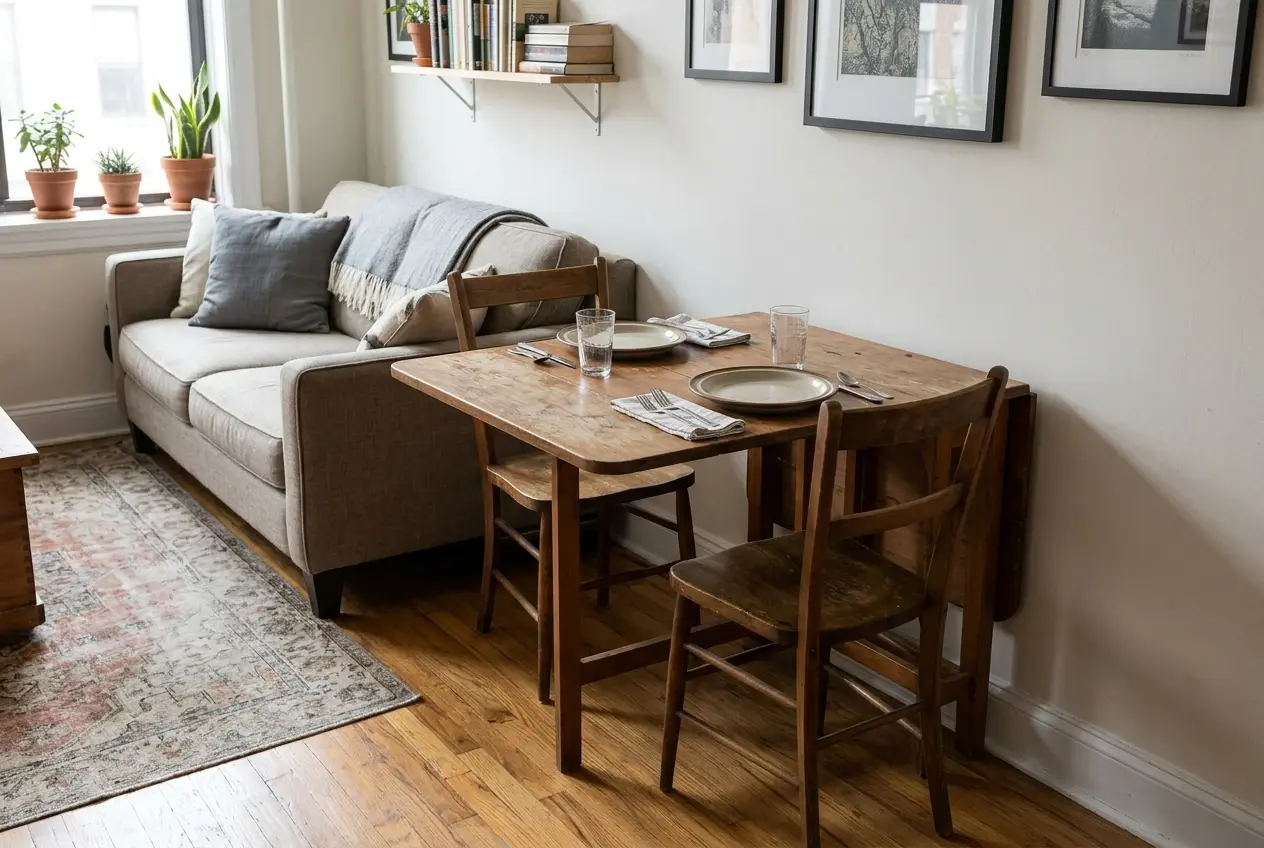
A table on casters adds another layer of flexibility: it can sit beside the sofa as a coffee table in the morning and roll over to become a desk by midday. The same surface that held a laptop for work calls can hold dinner plates an hour later, and neither use requires a second table waiting in a closet for its turn.
The pieces to avoid are fixed-size tables bought for one specific use, especially anything too large to move easily by one person. If a table can’t be repositioned without help, it’s going to end up permanently anchoring whatever spot it was first placed in, whether or not that spot still makes sense a year later.
Seating that doubles as storage
Seating in a studio has the same footprint problem as a bed: it sits in one place, takes up floor space constantly, and in a lot of apartments gets used for only a few hours a day. An ottoman with a lift-off lid or a storage bench turns that same footprint into a place to keep extra bedding, off-season clothing, or anything else that would otherwise need its own bin on a shelf.
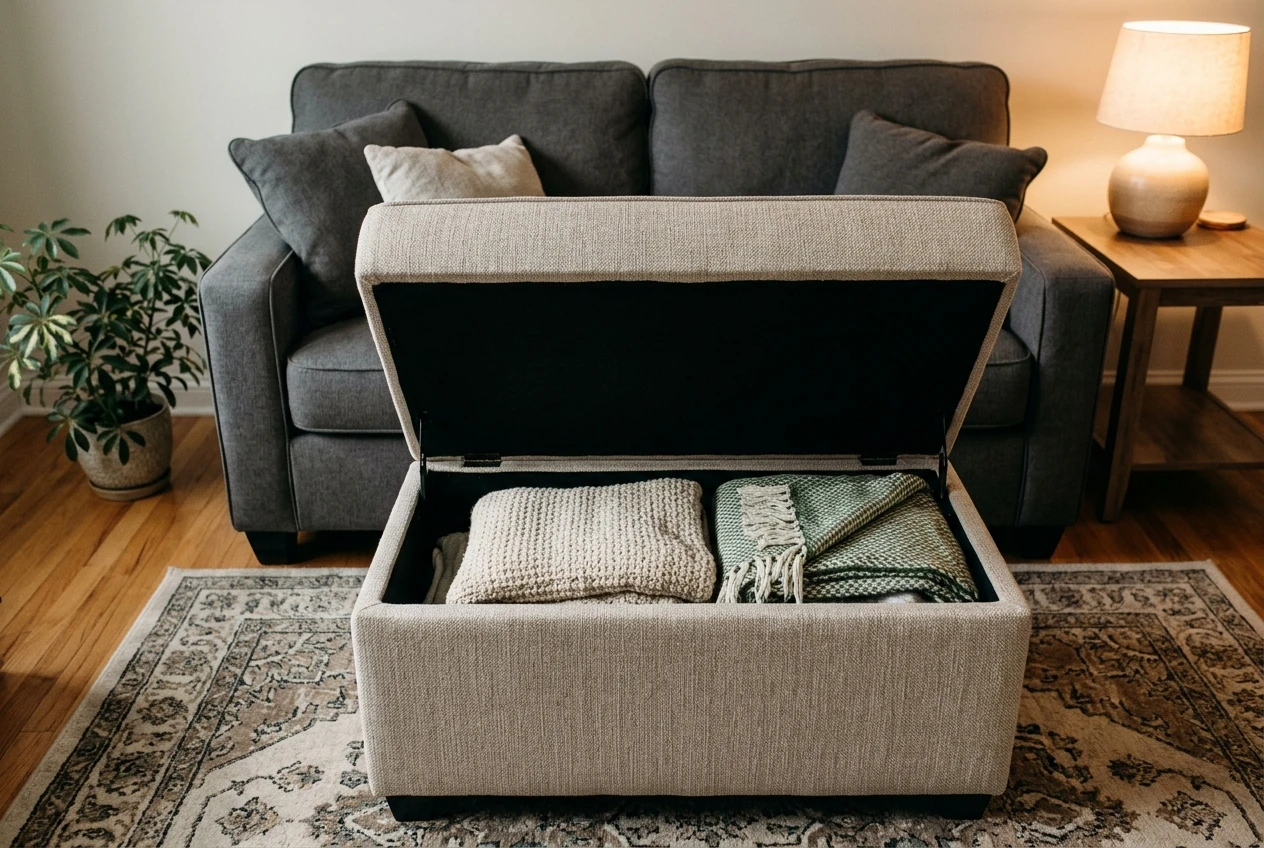
A sofa bed does the same job at a larger scale, folding the function of a couch and a guest bed into one piece instead of two, which matters in a studio that doesn’t have anywhere to put an air mattress when it’s not in use.
The one caution here is weight and mechanism quality. A storage ottoman with a lid that sticks or a sofa bed with a frame that sags after a year of folding isn’t saving space, it’s creating a replacement purchase. This is one category worth spending more on, because the failure mode is expensive.
Storage you already need, disguised as shelving
Every studio needs somewhere for books, kitchen items, files, and the dozens of small things a household accumulates, and open shelving can hold all of it without reading as “storage furniture” the way a filing cabinet or a plastic bin tower does. A single tall shelving unit against one wall often replaces what would otherwise be a bookcase, a kitchen cart, and a catch-all cabinet.

Shelving that reaches the ceiling rather than stopping at shoulder height uses vertical space a studio has in abundance and floor space it doesn’t. The top shelves can hold things used rarely, like seasonal items or spare bedding, while the lower shelves stay in daily rotation.
A shelving unit with closed sections at the bottom, baskets or cabinet doors, gives a place to put the things that don’t look good displayed, like chargers, mail, or cleaning supplies, without needing a separate closet. The open shelves above stay visually calm because what’s on them was chosen to be seen.
Lighting that replaces three separate lamps
A studio apartment usually needs light for three different jobs: general room light, task light for reading or working, and softer light for evenings, and most people solve this with three separate lamps scattered across three surfaces. A single floor lamp with adjustable arms and multiple bulb settings can cover all three jobs from one footprint instead.
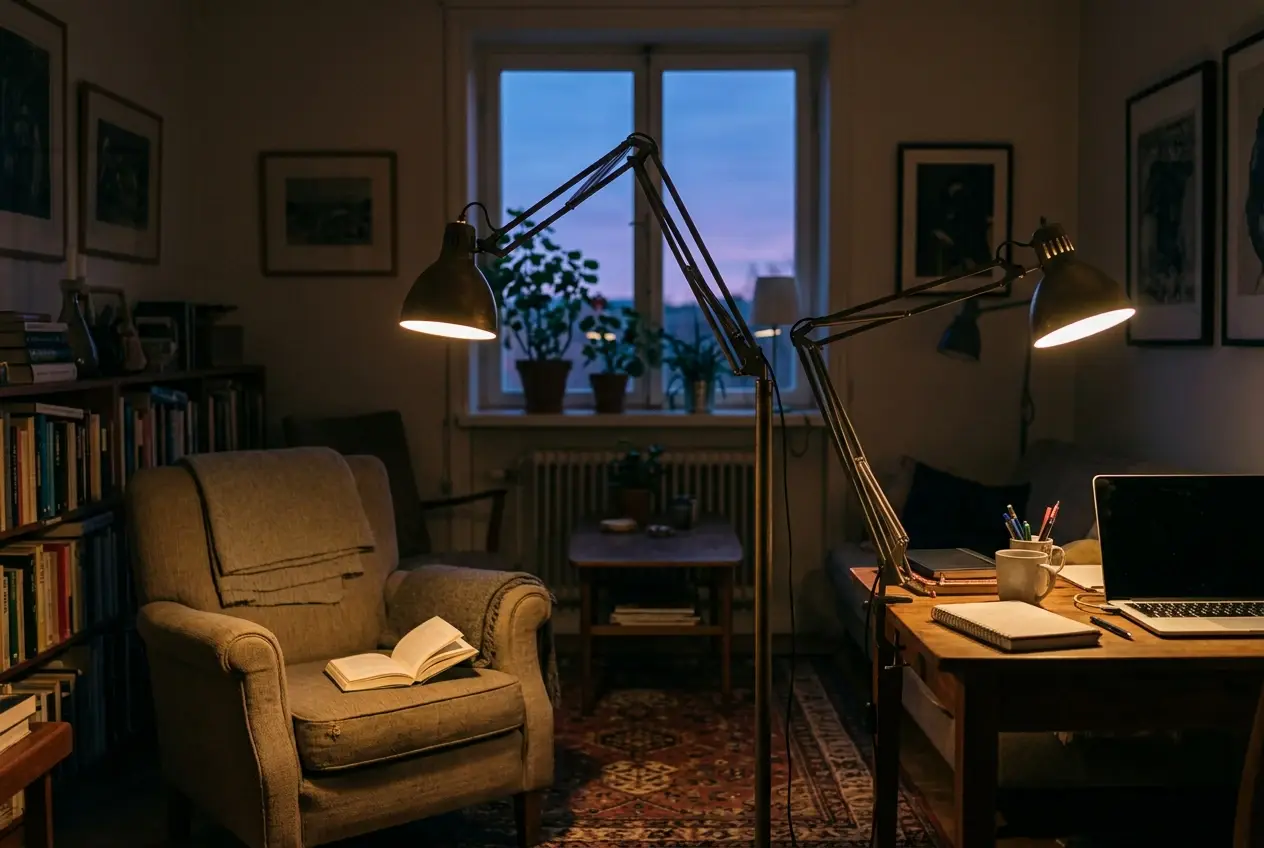
Lighting on a dimmer switch does something similar without adding a single extra object: the same fixture that lights a desk at full brightness during the day can be turned down for evening without needing a second lamp dedicated to “mood.” This is one of the few places where a single well-chosen piece genuinely replaces several cheaper ones, both in function and in the counter or floor space those cheaper lamps would have occupied.
A pendant light mounted from the ceiling frees up a side table entirely, which in a studio is often the same side table also being asked to hold a plant, a coffee cup, and a stack of mail. Taking the lamp off that surface gives the table back its job.
The one textile piece minimalists keep
Most textiles in a studio, throw pillows, extra blankets, decorative runners, are decoration first and function second, which is exactly the category a minimalist furnishing list tends to cut hardest. One textile piece earns a permanent place anyway: a rug large enough to define the living area within an open room.
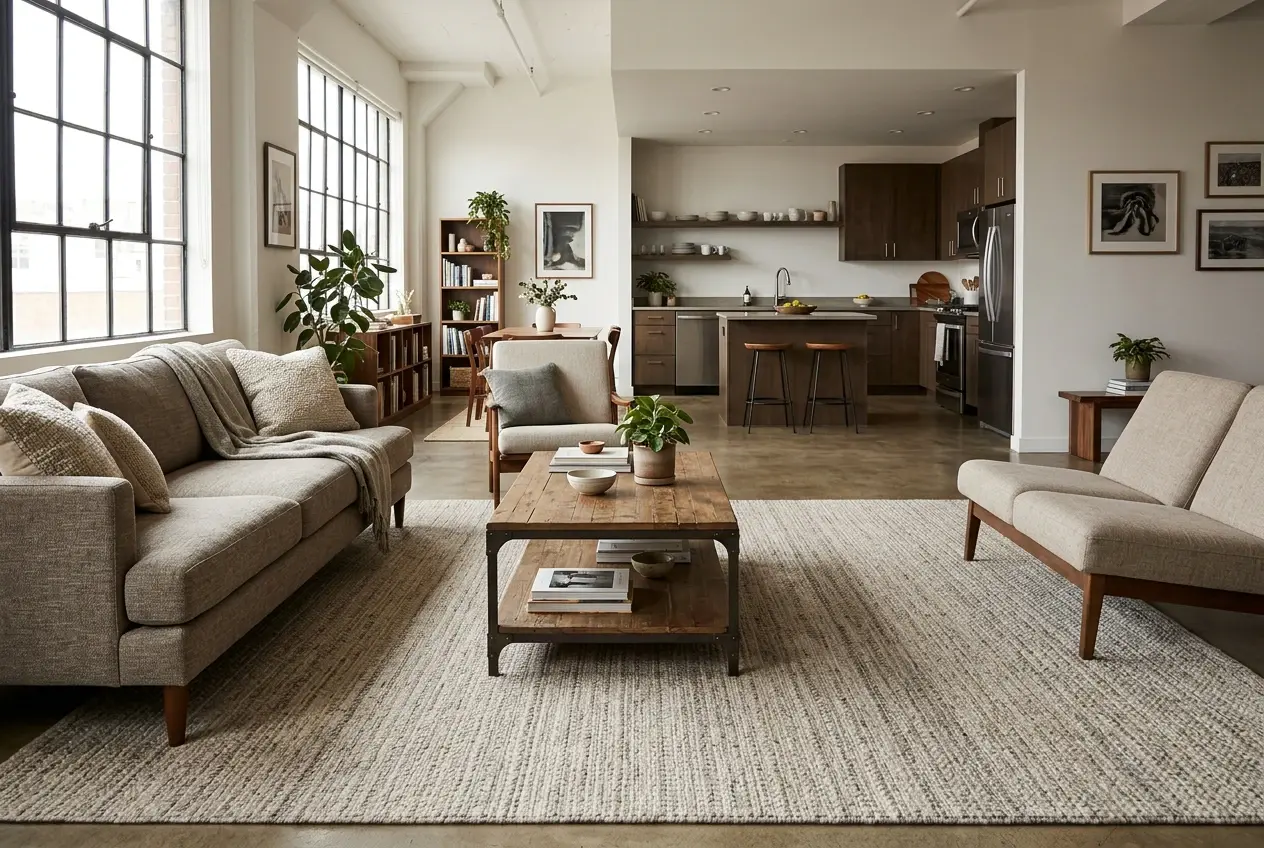
In a studio without walls to separate a bedroom from a living room from a kitchen, a rug does that separating with a single object instead of a room divider or a half-wall. It tells the eye, and the layout, where one zone ends and another begins, which is a real function, not a decorative one.
The rug worth keeping is sized for the furniture arrangement it anchors, not chosen to fill whatever blank floor is left over. A rug too small to reach the front legs of the seating it’s placed near reads as an afterthought no matter how good the rug itself is.
How to choose pieces that outlast trends
The furniture worth owning in a studio apartment is the furniture that still earns its footprint in five years, not just on the day it arrives. That means favoring solid materials over particleboard, mechanisms with a warranty over ones without, and finishes that aren’t tied to a specific color trend likely to look dated by the next one.
It also means resisting the urge to furnish a studio all at once from a single collection, which tends to produce a room full of pieces that match each other but don’t individually hold up. A platform bed bought for its storage, a table bought for its flexibility, and a shelving unit bought for its height don’t need to be the same brand or finish to work together; they need to each justify their own space.
Furniture that gets replaced every few years because it wore out or went out of style costs more over time than furniture bought once and kept, a pattern worth weighing the same way as any other recurring expense in a small space, as laid out in Clutter’s Hidden Costs. In a studio apartment, where every purchase has to clear a higher bar just to fit, that math is worth doing before buying, not after.
If you’re furnishing a studio because you’re paring down from a bigger space, Easy Downsize: How To Downsize Without Moving walks through the earlier step of deciding what to keep before you buy anything new.