
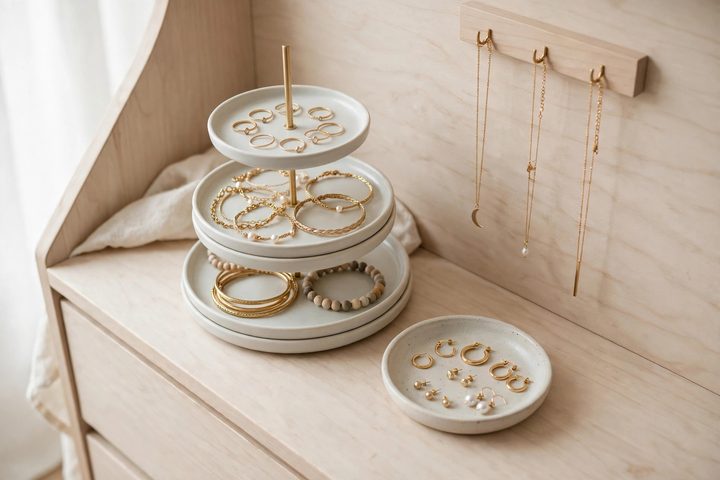
To organize jewelry without buying a jewelry box, sort your collection, group pieces by type, and give each piece a separate spot using dishes, gift boxes, or a spare utensil tray. Keep your daily favorites within easy reach, and use soft, covered storage for delicate or valuable pieces.
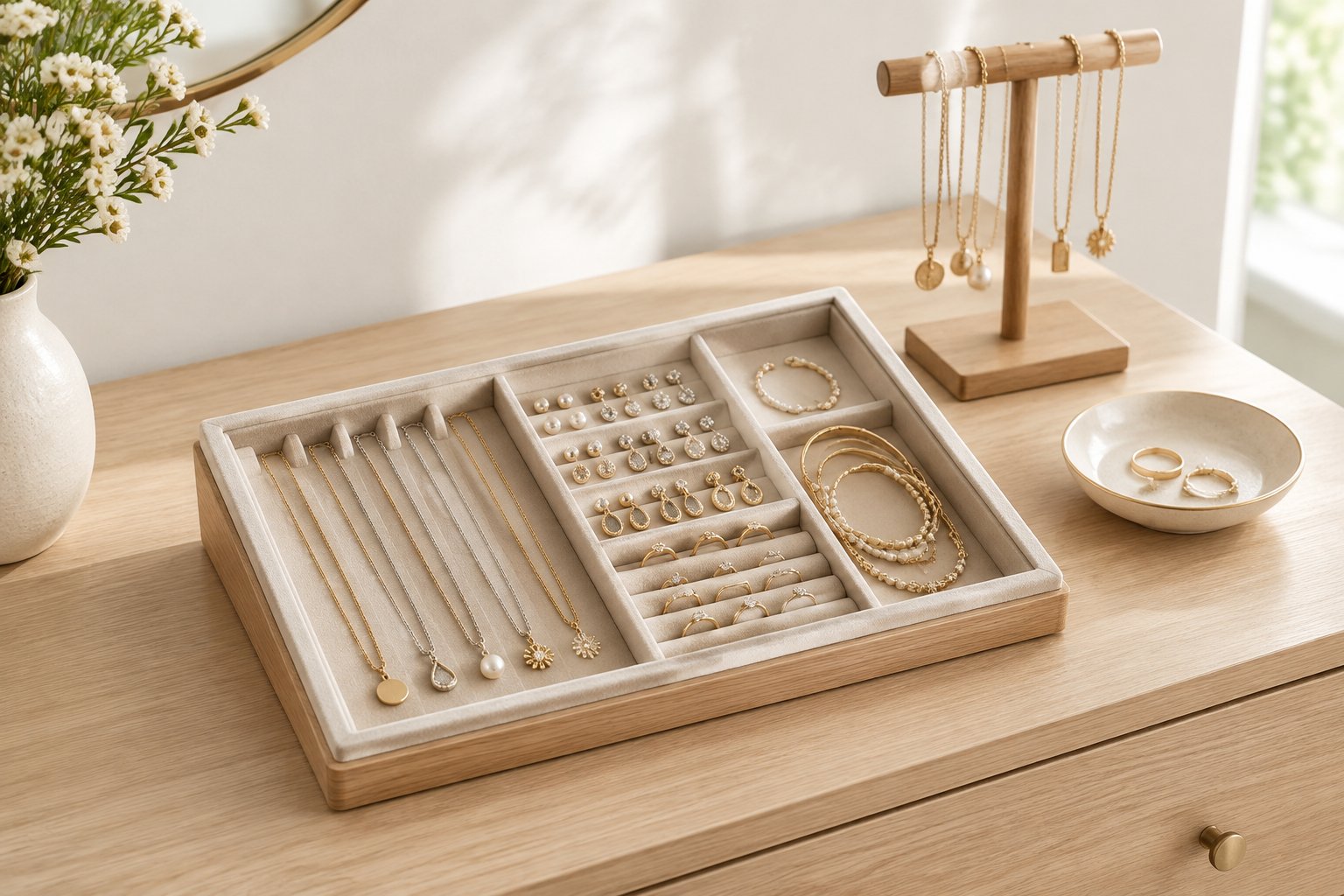
Your jewelry organization setup can start with what you already own. Even two plates and a candlestick offer a useful display when you secure them safely. By matching household objects to your collection, you free up space and make your favorite pieces easier to find each morning.
Table of Contents
Sort Your Jewelry Before Choosing Storage
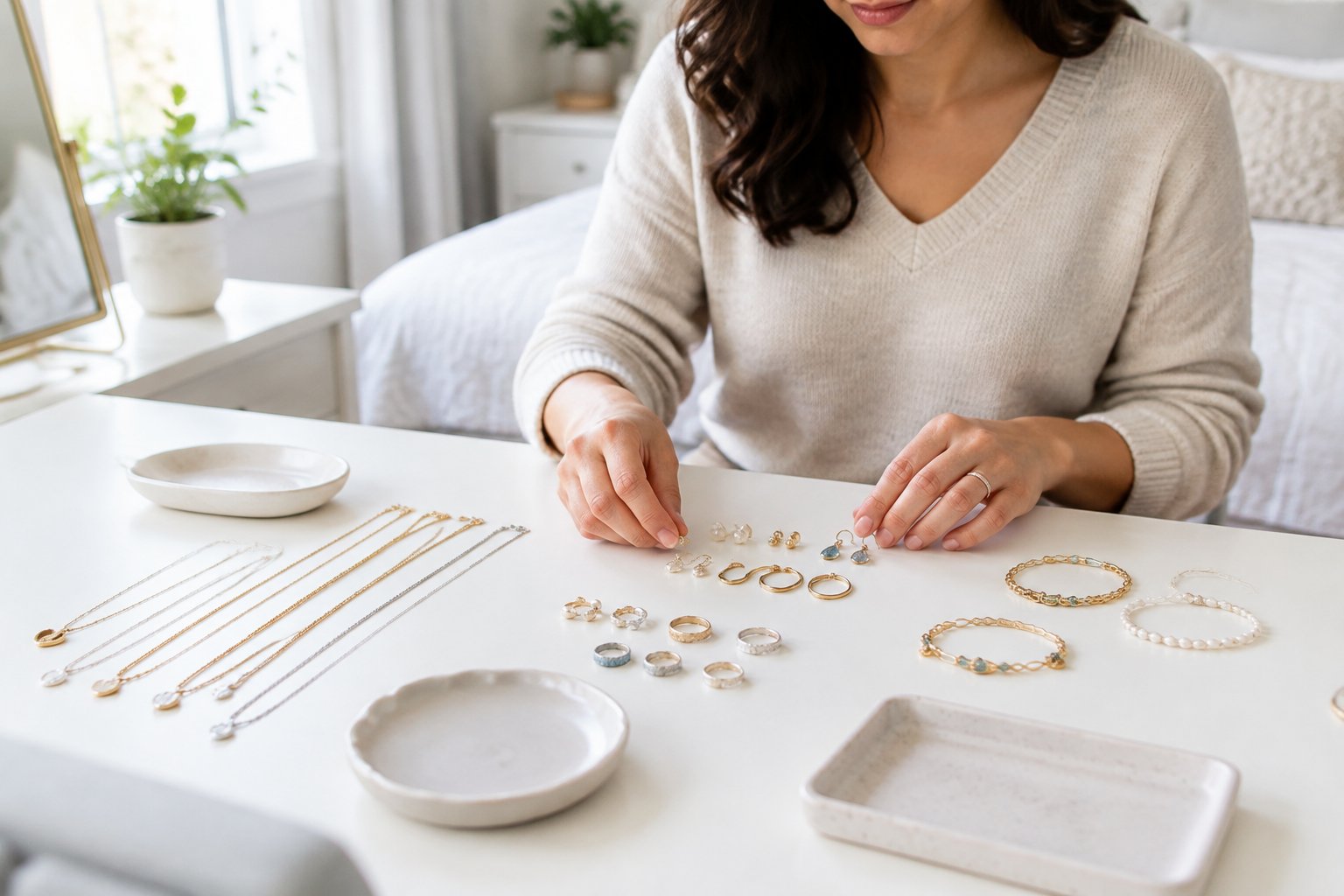
Sort your whole collection before choosing containers so you know how much space each jewelry type needs. Exploring practical jewelry storage ideas helps you match holders to your collection.
As you learn how to organize jewelry, separate pieces needing repairs from those ready to wear. Giving every item a dedicated spot simplifies maintenance later.
Gather Everything and Group Similar Pieces
Spread a clean, soft cloth across a table with good lighting. Gather jewelry from your dresser, bags, nightstand, and travel cases, then group necklaces, earrings, rings, and bracelets.
Match earring pairs as you go. Separate fine jewelry from costume jewelry, and set aside pearls or fragile pieces that need extra care. Keep loose backs in a small dish so they stay visible while you work.
Decide What to Keep, Repair, Donate, or Sell
Give each piece a decision: keep, repair, donate, or sell. Check clasps and earring posts, and look for loose stones before returning anything to your wearable collection.
This sorting stage also lets you clean jewelry before putting it away, ensuring items stay pristine in storage.
You make more room when you release pieces you no longer use. Keep donations wearable, confirm the recipient accepts jewelry, and put repair items in a labeled container with a specific next step.
Separate Everyday Favorites From Sentimental and Special-Occasion Pieces
Place your frequent choices closest to where you get dressed. Give special-occasion pieces protected space farther back in a drawer, where they remain easy to locate.
You can sort sentimental belongings at your own pace. Keep meaningful jewelry even when you rarely wear it, and add a short note about its history if that helps preserve the connection.
Give Each Jewelry Type Its Own Place
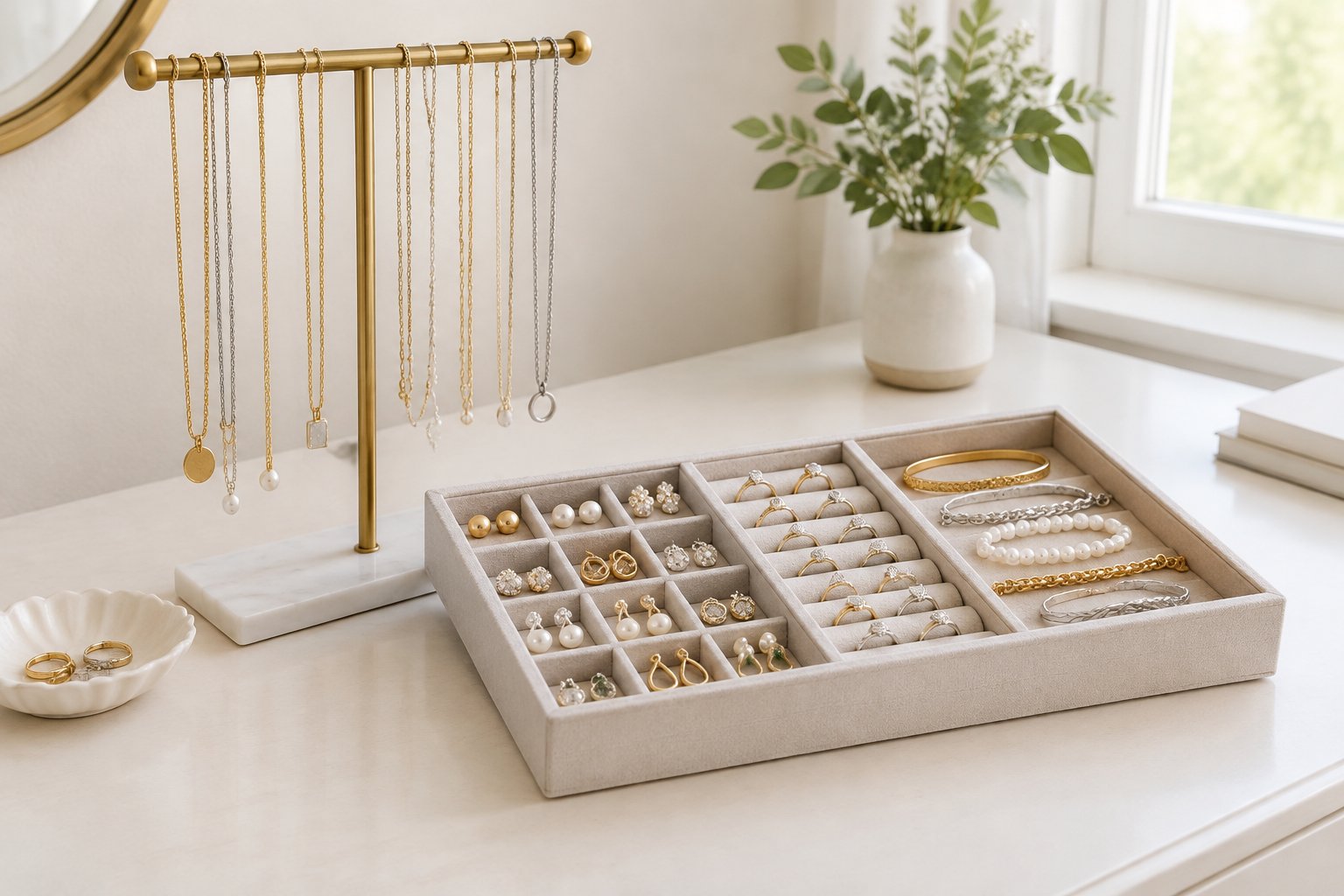
Match your jewelry storage to each piece’s shape, weight, and material. Use separate spaces to prevent chain tangles and contact between hard stones and softer surfaces.
Keep Necklaces Separate Without Stretching Delicate Strands
Fasten each necklace before putting it away, then give it its own hook or flat compartment. Mount smooth jewelry hooks inside a closet door for lightweight chains that hang freely without catching.
Spacing out wall-mounted or adhesive jewelry hooks prevents pendants from tangling together.
Lay pearls, heavy beaded strands, and fragile necklaces flat on soft fabric. Leave room for pendants so their weight stays supported. Keep chains from crossing, even inside long jewelry trays.
Keep Earring Pairs and Backs Together
Give each pair a small compartment or its own piece of cardstock. Secure stud backs loosely onto their posts, leaving enough room to avoid pressing decorative fronts against the backing.
Keep long earrings flat if their shape catches on fabric. For hoops, close the fastening before storage. Put spare backs in a separate labeled container so you can find them without searching through your earrings.
Separate Rings With Soft Dividers
Create a DIY ring holder by placing tightly rolled strips of clean, soft fabric inside a shallow box. Fit the rolls snugly together, then slide plain bands into the gaps.
A padded ring holder keeps metal bands upright so they take up less horizontal surface.
Give raised settings and fragile stones their own padded compartments. Check that the lid closes without touching the tops of your rings, and keep fabric loops away from prongs that might snag.
Lay Bracelets Flat or Support Sturdy Bangles
Store chain bracelets fastened and flat, with enough space for charms to rest without pressure. Keep flexible beaded bracelets supported along their length.
Use an existing sturdy upright holder for smooth, durable bangles if its base stays steady during use. Avoid crowding the holder, and keep delicate bracelets in separate lined spaces so you do not need to slide them past other pieces.
Make Useful Organizers From Things You Already Own
Build your DIY jewelry organizer around spare household items that fit your sorted collection. When you choose storage for the pieces you have, you avoid creating compartments that are too small or awkward to use.
Create a Stable Tiered Stand With Two Plates and a Candlestick
Use a broad plate as the base, a short candlestick with wide contact surfaces as the center, and a smaller plate on top. Check for cracks and chips before assembling.
- Wash and fully dry each part.
- Check the arrangement on a level surface without jewelry.
- Bond both candlestick contact points using adhesive labeled for the materials.
- Follow the adhesive’s full curing instructions before loading the stand.
Keep the heavier plate underneath and place light costume jewelry on top. Leave heirlooms in protected storage. If the stand rocks or the surfaces fit poorly, use the plates separately.
Turn Small Dishes and Gift Boxes Into Compartments
Use shallow dishes for daily pieces and small gift boxes for covered storage. Add a clean, soft liner where jewelry touches a hard surface.
Arrange the containers inside a drawer or on a stable tray, leaving enough room to lift each piece without disturbing another. Reuse jewelry boxes and pouches that came with your pieces, especially fitted packaging that supports fragile shapes.
Repurpose a Utensil Tray or Add Dividers to an Existing Box
Clean and dry a spare utensil tray, then line any rough sections. Flat jewelry trays and cutlery organizers keep individual chains separated and untangled.
Use long slots for necklaces and shorter spaces for bracelet chains or earring cards.
For homemade drawer organizers, cut sturdy cardboard strips to fit an existing box and cover exposed edges with smooth fabric. Keep glue away from jewelry and let it cure fully. Test these jewelry organization ideas with everyday costume pieces first.
Use Spare Ribbon or Cardstock to Hold Earring Pairs
Punch paired holes in clean cardstock, then insert your earrings and secure the backs. Leave enough space between pairs for the fronts to sit without touching.
For lightweight hook earrings, stretch a wide ribbon across a firm backing and secure its ends. Place your finished jewelry organizer inside a drawer if dust is a concern. Keep cardstock and ribbon jewelry organizers away from damp areas.
Fit Your Storage Into a Small Space
Give your jewelry a defined area within furniture or closet space you already use. For a calmer small bedroom, favor jewelry storage solutions that leave your floor and getting-ready surface clear.
Use One Shallow Drawer Instead of More Furniture
Turn an available dresser drawer into a jewelry drawer organizer with lined boxes and small dishes. A custom jewelry drawer organizer layout prevents loose accessories from shifting when opened.
Check drawer height before adding containers, then close it slowly to confirm nothing catches. Place frequent choices toward the front and longer necklaces along the sides.
Before buying a bulky jewelry armoire or standing jewelry cabinet, test your drawer space. A wall-mounted jewelry cabinet or a classic jewelry armoire takes up floor area that simpler jewelry storage ideas avoid.
Make a Hanging Organizer With Existing Hooks and Fabric
Use a sturdy fabric panel with securely sewn pockets, suspended from hooks already fixed to a suitable surface. Keep small items inside individual pouches within the pockets so they stay separated.
Check the hooks’ weight limits and test the panel with light costume jewelry. Leave clearance around door hinges and handles. As with other hanging jewelry organizers, keep your homemade hanging jewelry organizer clear of anything that snags as the door moves.
Keep Only Daily Favorites on Your Dresser
Choose a shallow dish or tray for the pieces you wear most. Keep each item visible, with chains laid separately and earring pairs together.
As part of a clutter-free dressing area, leave enough empty surface to get ready comfortably. If you prefer visible jewelry storage ideas, display a small selection and keep the rest protected in your drawer.
Protect Your Pieces and Keep the System Tidy
Keep your jewelry safe by returning it clean and dry to storage suited to its materials. Use open displays for easy access to durable pieces, and reserve secure, covered spaces for fragile or valuable jewelry.
Clean and Dry Jewelry According to Its Materials
Check the maker’s care instructions before you clean jewelry. When you do not know a stone, finish, or treatment, ask a qualified jeweler before applying cleaners.
- Pearls: Wipe gently with a soft cloth and let the string dry flat before storing.
- Plated or glued costume pieces: Avoid soaking and use only a cleaning method approved for the piece.
- Silver: Use a silver-safe cloth when suitable, keeping it away from sensitive stones and finishes.
- Gemstone jewelry: Confirm whether water, soap, or ultrasonic cleaning is safe for that particular piece.
Keep wet jewelry outside closed containers until it has dried fully.
Protect Delicate and Valuable Pieces From Scratches, Moisture, and Loss
Store fragile pieces individually in soft pouches or padded compartments. Keep them away from bathroom humidity, direct sunlight, and cosmetics.
For valuable pieces, use secure storage appropriate to their value and your household. A decorative box’s small lock offers limited theft protection. If you already use a jewelry safe, keep pieces separated inside it and follow its moisture-control guidance.
Photograph important pieces and keep purchase details or appraisals with your records.
Return Pieces After Wearing and Reset Your Storage Regularly
Put jewelry back in its assigned place when you take it off. If you need a temporary drop spot, choose a raised-edge dish away from sinks and clear it during your getting-ready routine.
Build the check into your home organization routine. Reunite pairs, remove repair items, and wipe empty compartments when you notice dust. If returning a piece feels awkward, adjust its location or container.
Make What You Own Easier to Wear
Your jewelry organization system should give you easy access to favorites while protecting pieces that need extra care. Start with your sorted collection, then reuse containers that keep each item separate and supported.
Keep your daily selection small enough to see at a glance. If you choose a new piece for yourself, decide where it will live before bringing it home. Leave your repair container labeled and your next morning’s choices easy to reach.
Frequently Asked Questions
You can handle most jewelry storage needs with separate compartments, soft support, and a location close to where you dress.
What is the easiest way to organize jewelry without buying anything?
Use small dishes for daily favorites and lined gift boxes for the rest of your sorted collection. Keep necklaces separate and attach earring pairs to spare cardstock.
How do I organize jewelry in a drawer without special inserts?
Arrange small boxes inside your drawer, then add soft fabric to cushion each compartment. Leave space around tall settings and check that the drawer closes without touching your jewelry.
How can I organize a jewelry box I already own?
Empty your jewelry box, clean its lining as directed, and assign each compartment to a specific jewelry type. Use its fitted slots for suitable pieces, and move oversized items to separate supported storage.
What jewelry storage works best in a small bedroom?
Use a shallow drawer divided with containers you already own to preserve your floor and dresser space. If drawer space is limited, use secure closet hooks or fabric pockets for lightweight costume jewelry.
Is it better to hang necklaces or lay them flat?
Hang lightweight, sturdy necklaces separately on smooth hooks, and lay pearls, heavy strands, or fragile pieces flat. For valuable necklaces, choose individual padded compartments or suitable fitted packaging.