

For manageable bedroom decluttering, remove obvious trash and laundry first, sort one small area at a time, and put away everything you keep before opening another drawer. You give yourself a usable room at every stopping point, even when you have limited time or storage.
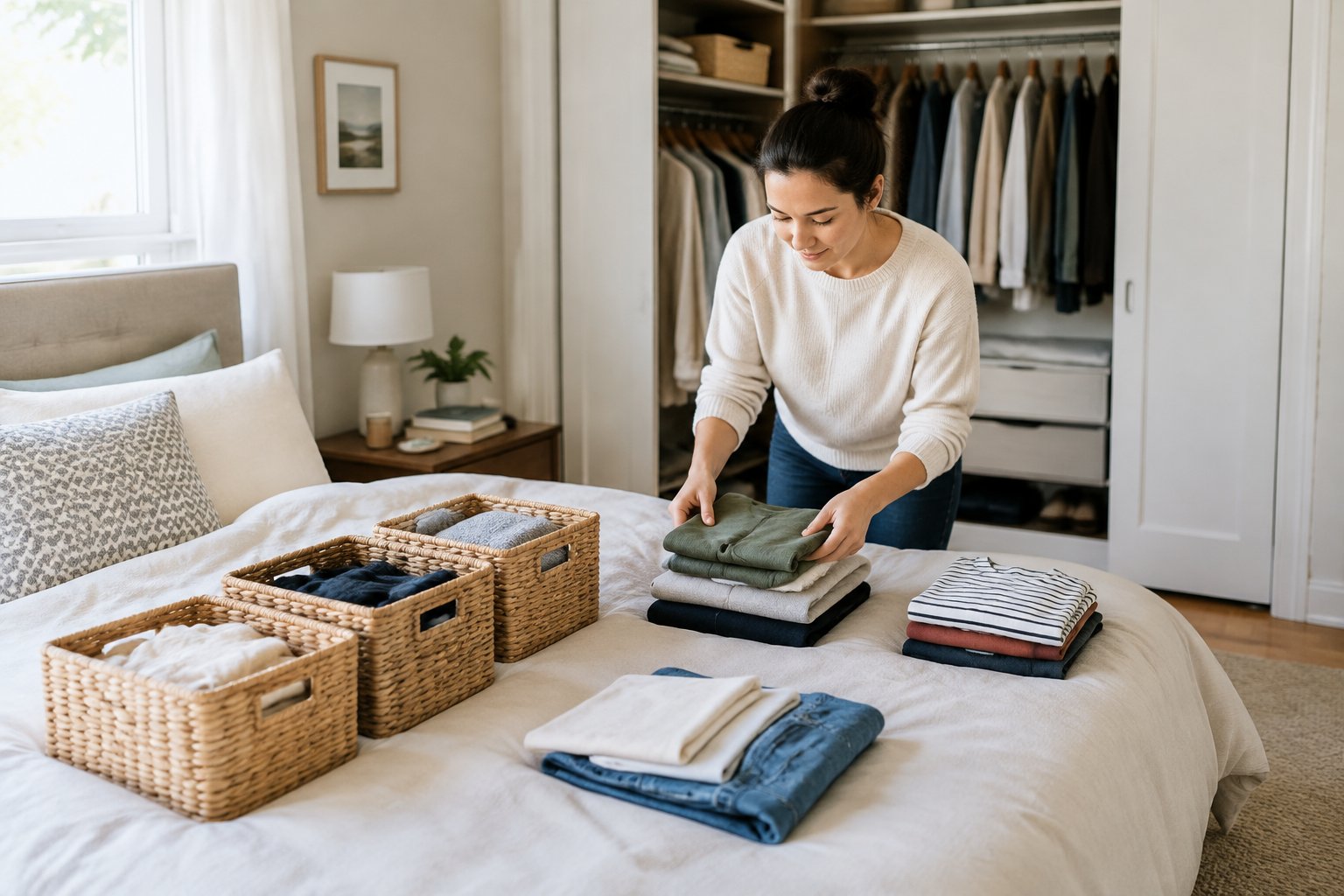
You make faster decisions about bedroom clutter when you start with everyday belongings and save emotionally difficult choices for later. A clear path beside your bed or a nightstand with room for your glasses gives you a useful result immediately.
When decluttering the bedroom, work within the space and energy you have. Simple decluttering tips can keep you from feeling overwhelmed.
If your room also serves as your office, keep that necessary function and give its supplies a defined place.
Table of Contents
Where Should You Start for Quick Progress?
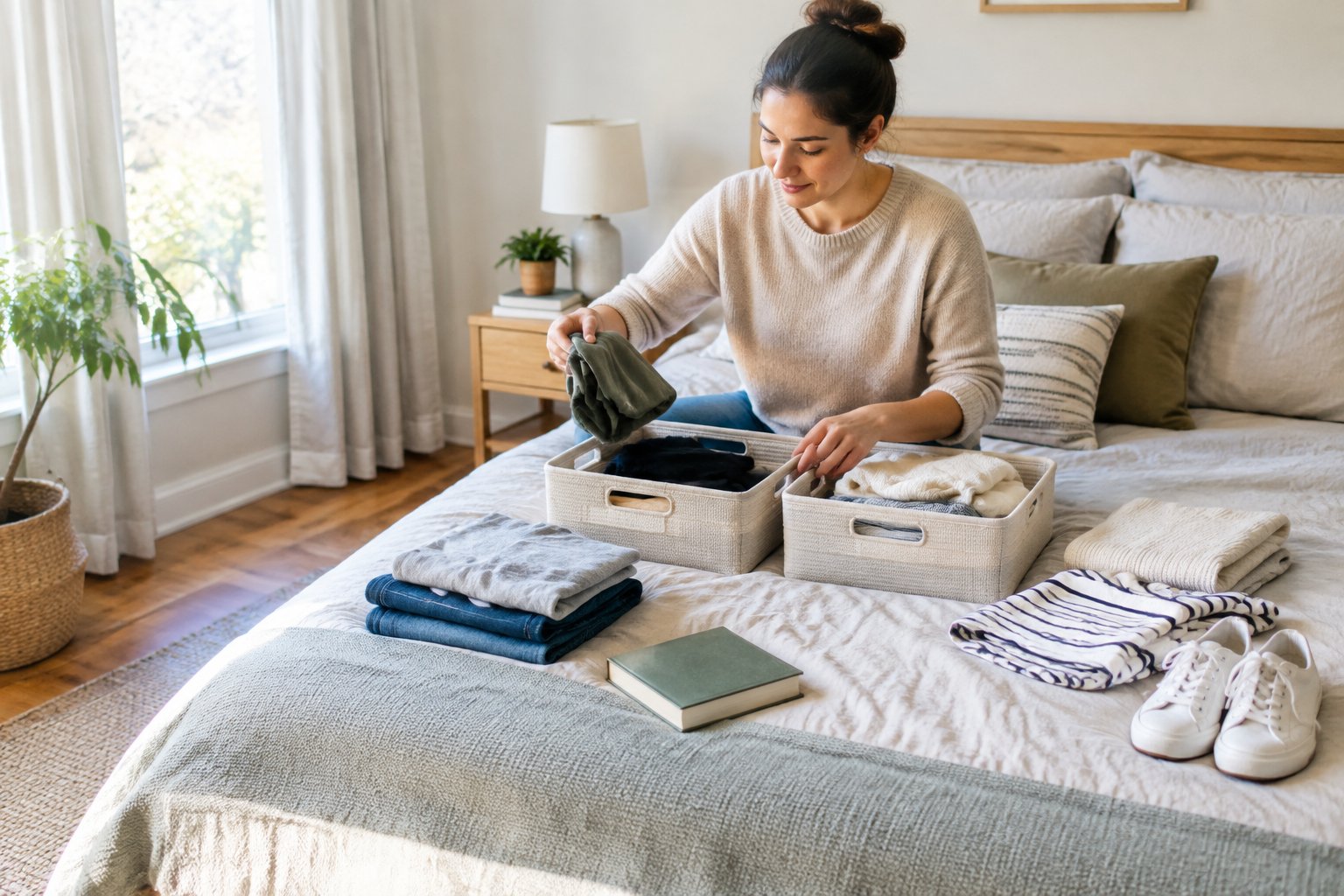
Start with one visible area and the belongings that require the fewest decisions. Keep your sorting containers nearby so you spend your session clearing space without repeatedly walking between rooms.
Set a Manageable Timer and Choose One Area
Set a timer for 15 minutes, or choose a shorter round if your energy is low. Pick a boundary you can finish: the top of your dresser, one drawer, or the floor beside your bed.
Leave unopened drawers alone until you finish that boundary. When your timer sounds, put away the items you have sorted and choose whether to continue.
If you are unsure how to declutter without creating a larger mess, take out only what you have time to return. Your stopping point is a finished area with no loose sorting pile.
Prepare Keep, Relocate, Donate, and Discard Containers
Use bags, boxes, or baskets you already own, and label them:
- Keep: Your useful or meaningful belongings that belong in the bedroom.
- Relocate: Your belongings that have a home elsewhere.
- Donate: Your clean, usable items that meet the recipient’s acceptance rules.
- Discard: Your trash and unusable items, separated for appropriate disposal or recycling.
Keep your “keep” container small enough to empty before you stop. You reduce excess before reorganizing by deciding what deserves space before choosing containers for it.
Remove Trash, Dishes, and Laundry First
Collect wrappers, empty packaging, and other obvious trash. Leave unfamiliar papers for a closer look so you avoid discarding something important.
Gather dishes for the kitchen and put dirty clothing in your hamper. Separate clean laundry from clothing you intend to wear again.
Use this first pass to uncover working space. Addressing bedroom clutter early gives you momentum for larger tasks.
Among decluttering strategies, removing easy items gives you a clear starting point without demanding difficult decisions.
Work Through a Zone-by-Zone Checklist
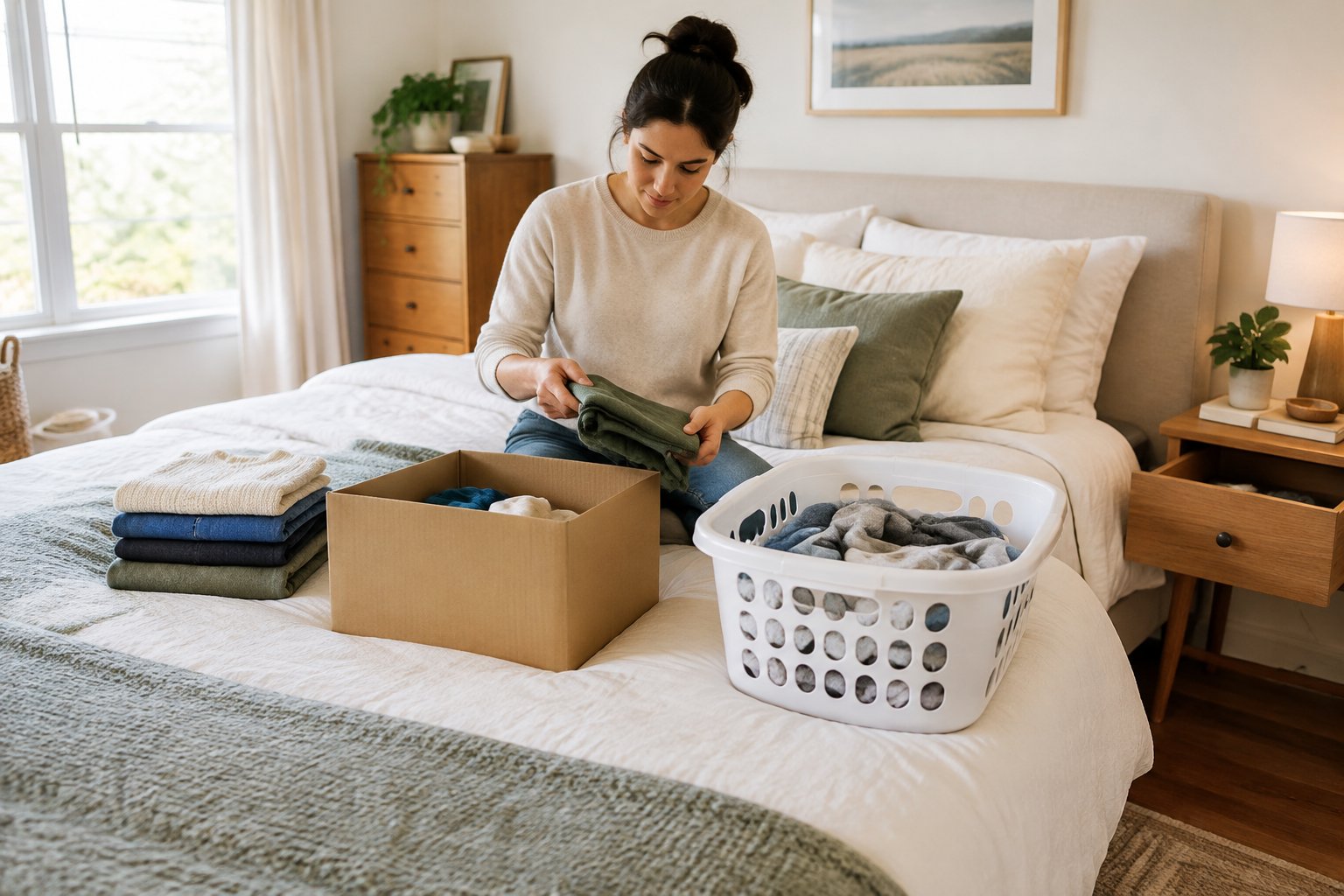
Follow your decluttering checklist from visible surfaces to enclosed storage. Finish each zone by returning its keepers and removing its outgoing items before moving ahead.
Clear Dresser Tops, Chairs, and Floor Space
Clear a manageable section of your dresser top and wipe the exposed surface. Return what you use there, along with any decoration you deliberately choose to display.
Sort clothing draped over your chair into laundry, clean storage, or your wear-again spot. Move bags and shoes out of walking paths, giving each a destination.
Stop when you can open your dressers fully and walk between the door and bed without stepping around belongings. If your chair serves a useful purpose, leave its seat available for that purpose.
Keep Nightstands Focused on Bedtime Essentials
Choose your nightstand contents around what you reach for in bed. Keep your glasses, reading light, current book, or necessary care supplies within comfortable reach.
Check inside the drawers for receipts, unused cords, and duplicates. Keep necessary medication stored according to its label and your household’s safety needs.
If unread stacks crowd the surface, sort your books by what you intend to read or keep. Finish with enough open space to set down your usual bedside essentials without balancing them on a pile.
Sort Closets and Dresser Drawers One Category at a Time
Choose one category, such as sweaters, and gather those items from the closet and drawers. Compare similar pieces so you can spot duplicates and see which ones you reach for.
During your closet clean-out, check fit, comfort, condition, and relevance to your current life. Keep necessary seasonal clothing and occasional-use outfits when you have a clear reason for owning them.
Return your chosen pieces before pulling out the next category. Your stopping point is a drawer that closes easily or a closet section where you can remove a garment without disturbing everything beside it.
Check Under the Bed for Forgotten Belongings
Pull out one container at a time and check its contents. Look inside bags and boxes before making decisions, especially when they contain documents or keepsakes.
Keep under-bed storage for specific belongings you intend to retrieve, such as spare bedding or off-season clothes. Remove empty packaging and items you had forgotten you were keeping.
Clean the exposed floor before returning anything. Selecting the right under-bed storage bins keeps dust away and belongings protected.
Finish with identifiable contents and containers you can reach without dismantling the room.
How Do You Decide What Deserves to Stay?
Keep belongings that support your present routines or hold meaning you want to preserve. Give uncertain items a specific next step so they leave your active sorting space.
Keep What Supports Your Current Needs and Routines
Learning how to declutter starts with asking the right questions. Ask yourself whether you use the item, need it for an identifiable occasion, or value having it in your room. Then decide where you will store it.
Include your medical equipment, accessibility aids, work supplies, and other necessities in that decision. If your bedroom serves several purposes, assign each function a contained area.
When you struggle to let go of material possessions, separate the item’s original cost from its usefulness today. Ask whether keeping it earns the space and care it requires from you now.
Use the 80/20 Rule as a Prompt, Not a Quota
Use the 80/20 rule to notice which belongings receive most of your use. Treat it as a reflection prompt; you do not need to calculate percentages or remove a prescribed share of your possessions.
Look at your frequently worn clothes and ask what makes them work for you. You might notice a preference for comfortable fabrics or easy-care pieces.
Give those dependable items accessible storage. Evaluate occasional-use belongings individually, including formal clothing and seasonal equipment.
Handle Sentimental Items Without Rushing Decisions
Place sentimental items in a separate container when they interrupt your progress. Choose a later time to review them when you have enough attention for the decision.
As you declutter sentimental items, decide which pieces you want to display and which deserve protected storage. A photograph is another option if you want a visual reminder and feel ready to release the object.
Give yourself permission to keep meaningful belongings. Finish this round by containing them safely and noting when you will revisit any unresolved choices.
Set Deadlines for Repairs, Sales, and Donations
Write a specific completion date on each outgoing bag or repair note. Match the deadline to an action you control, such as listing an item for sale or taking clothing to a donation location.
For repairs, identify what needs fixing and whether you are willing to do the work. Put the necessary appointment or task on your calendar.
Choose a fallback for unsold items before you list them. Check donation requirements, then place accepted items in a safe departure spot that keeps your doors and walkways clear.
Give Everything a Home and Prevent New Piles
Your bedroom organization works best when returning an item takes little effort. Store frequent-use belongings where you reach for them, and reserve less accessible space for occasional needs.
Reuse Drawer Organizers and Dividers Before Buying More
Test your existing drawer organizers after you finish sorting. Use shallow boxes or spare trays to separate small belongings, and adjust drawer dividers around the amount you keep.
For practical minimalist home organization, group items by how you use them. Keep getting-dressed supplies together and bedtime supplies beside the bed.
Open and close the drawer after filling it. Remove or rearrange anything that catches, tips over, or makes the contents difficult to reach.
Choose Baskets, Bins, and Shelves for Specific Needs
Assign a category before selecting storage baskets or storage bins. Measure your available space and check that you can comfortably lift or slide out the filled container.
Use stackable storage bins for occasional-use belongings when stacking leaves the contents accessible. Label the side you will see from the room.
Consider floating shelves only when you have a defined use for the wall space. Follow mounting and weight instructions, and keep heavy or breakable objects away from the area above your pillow.
Create a Designated Spot for Clothes to Wear Again
Choose a hook, hanger, or small section of your closet for clothes that are suitable for another wear. Give this category an obvious boundary.
When the space fills, review what is there and return clean pieces to storage or put them in the laundry. Keep damp or soiled clothing out of this area.
Place the spot where you normally get undressed. You are more likely to use it when it fits the movement you already make.
Finish With a Clear Bed and a Five-Minute Daily Reset
End every session with your bed ready to use. Return keepers to their homes, empty the relocate container, and secure outgoing bags in their departure spot.
Add a five-minute reset to your night routine checklist. Put away loose clothing, remove dishes, and return bedside items to their places.
If the same pile returns, examine its contents during your next reset. Move its storage closer or make the container easier to use so maintaining a tidy bedroom requires fewer steps.
Keep Space for What Matters Most
You finish a useful decluttering session with an accessible bed, clear walking space, and a home for the belongings you keep. Complete your donation and disposal plans so outgoing items leave your room.
As you continue decluttering your home, use an intentional minimalist mindset to consider what you bring back into the space. Before adding something, identify its purpose and where you will keep it.
Leave your next unfinished area contained. Note the drawer or category you plan to tackle, then stop with your bedroom usable.
Frequently Asked Questions
You can adapt your bedroom decluttering plan to your attention, available storage, and support needs.
Can I declutter my bedroom in one day?
You can complete a bedroom in one day when the volume of belongings and the decisions fit your available time. Use the zone checklist and reserve the end of your session for putting items away and removing outgoing bags.
What should I remove from my bedroom first?
Remove obvious trash, dishes, and dirty laundry first. Then collect items that belong elsewhere in your relocate container, keeping valuable papers and uncertain belongings for a deliberate review.
How can I declutter my bedroom when I have ADHD?
Use a visible, narrowly defined task and keep your sorting containers within reach. When decluttering with ADHD, try a short timer or a supportive person working quietly nearby, then finish by putting away everything you touched.
How do I organize a small bedroom with very little storage?
Give your easiest-to-reach storage to daily necessities, and use measured under-bed or vertical space for clearly defined categories. Reduce duplicates before adding containers, and keep access to your doors and drawers clear.
When should I ask a professional organizer for help?
Ask a professional organizer for help when you repeatedly stall, need an accessible system, or face a volume of belongings you cannot manage safely alone. Explain your goals and decision-making boundaries in advance, including which possessions require your explicit approval before removal.