
A minimalist grocery shopping list for one person works best when it starts small and leaves room for what you’ll actually eat. The core of a workable one-person list is a short set of flexible bases (rice, eggs, canned beans, frozen vegetables, a couple of fresh proteins) bought in quantities sized to about 8 to 12 home-cooked meals a week, not a full 21. That one adjustment solves most of the overbuying and spoilage that makes solo grocery shopping feel harder than it should.
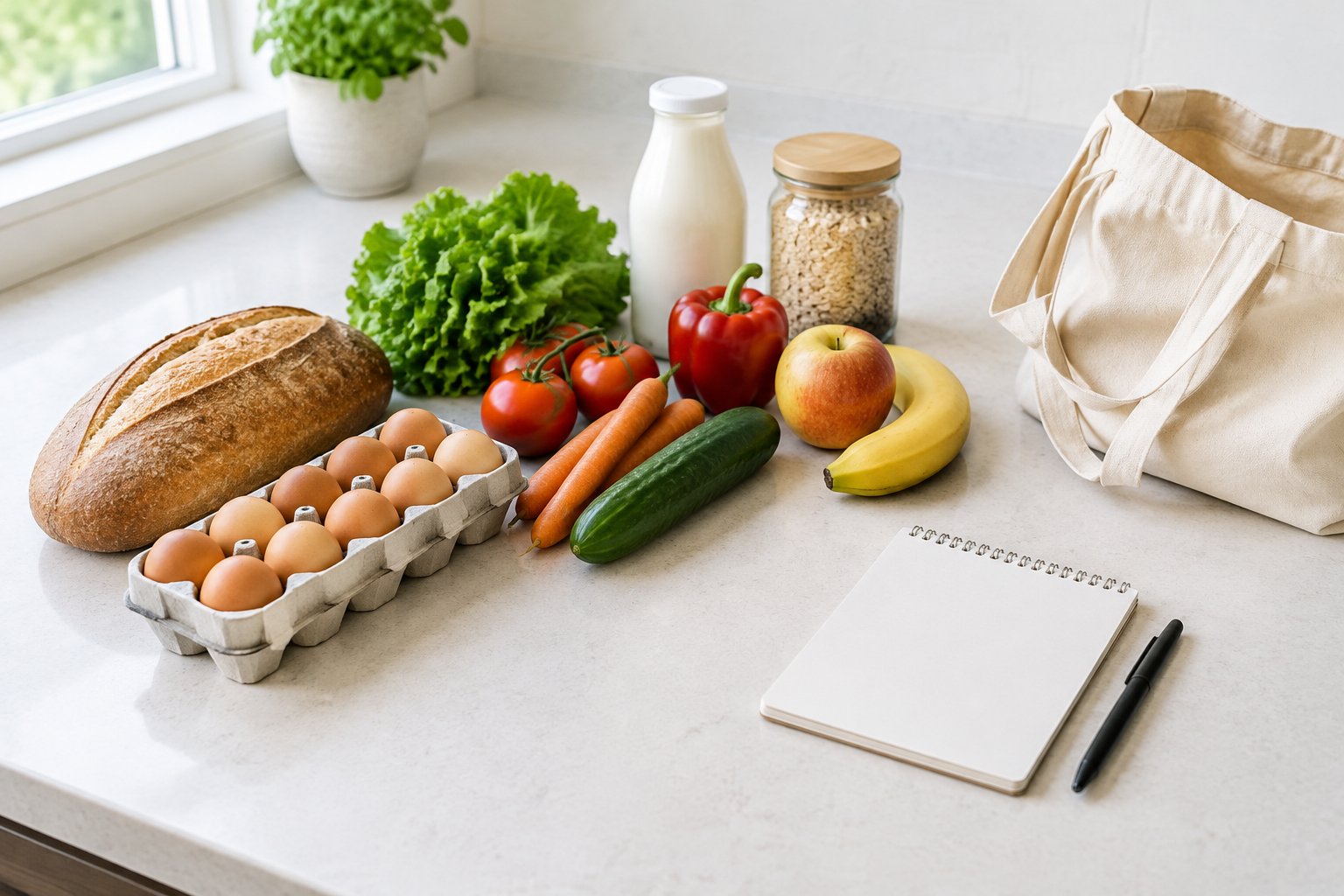
Shopping for one doesn’t mean a sparse fridge or skipped meals. It means buying fewer things on purpose, so each item gets used instead of forgotten in a crisper drawer. The rest of this list shows exactly what to buy, how much, and how it turns into a full week of food without a cart full of guesswork.
Table of Contents
Key Takeaways
- A short, flexible grocery list built around pantry staples, fresh produce you can finish, and planned proteins covers a realistic week of solo meals.
- Simple meal prep and smart storage habits help reduce food waste while keeping weekly spending low.
- A simple 7-day rotation and the cook-once, eat-twice rule turn a handful of ingredients into varied dinners without extra shopping trips.
- The same approach scales to two weeks or a month by adjusting perishables and buying pantry basics in bulk only once you know you’ll use them.
A One-Week Shopping List with Sensible Quantities
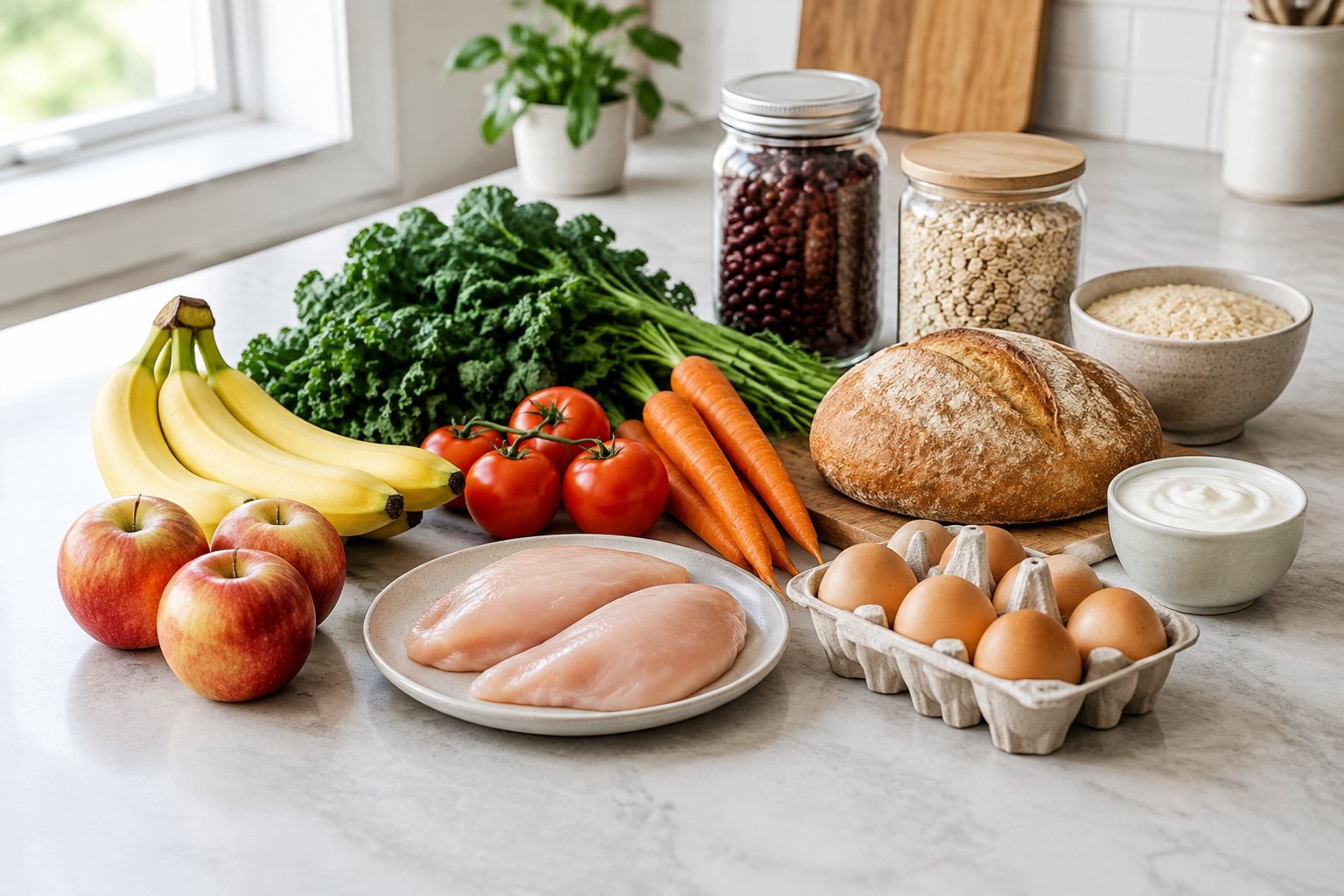
A minimalist grocery list for one person works when it’s organized by category and sized to what one cook can realistically finish before it goes bad. You can easily maintain a balanced diet with a short list of versatile ingredients that overlap across several meals, rather than buying one of everything in the store.
Pantry Staples: Choose a Few Flexible Bases
Pick two or three grain or starch bases that do multiple jobs. Rice or brown rice, pasta, oats or rolled oats, and potatoes all last for months in dry or cool storage and anchor daily meals.
Quinoa and bread round things out if you want more variety. Quick-cooking quinoa offers an adaptable base for grain bowls, while bread is worth freezing half a loaf immediately rather than watching it mold on the counter.
Canned beans (black beans or chickpeas), canned tuna, and canned tomatoes belong in every solo pantry as backups for nights you don’t feel like cooking from scratch.
Fresh Produce: Pick What You Can Finish
Mix something that spoils fast with something that holds for the full week. Spinach and bananas are good for the first few days; carrots and apples hold through day six or seven without much fuss.
Sweet bananas pair easily with rolled oats, while crisp apples make a filling snack with peanut butter. Crunchy carrots can be roasted alongside potatoes or eaten raw with lunch.
Frozen vegetables are worth keeping alongside fresh produce. They let you cook exactly the portion you need for one meal while the rest stays usable in the freezer instead of wilting in the fridge.
Protein, Eggs, and Dairy: Buy for Planned Meals
Buy protein sources against the meals you’ve actually planned, not as a general stock-up. A dozen eggs, one package of chicken (portioned and frozen if it’s a family-sized pack), a bag of dried or canned lentils, a jar of peanut butter, and a bag of nuts cover most of a week’s protein needs without overlap.
A small portion of nuts also adds healthy crunch to morning oatmeal, yogurt bowls, and savory salads.
Dairy products like milk and plain yogurt are worth buying in the smaller size if you only use a splash of milk in coffee or oatmeal. Smaller containers finish before they turn, which matters more for a single household than the per-unit price.
Flavor Basics: Keep Seasonings Simple
A short list of flavor basics stretches every other ingredient further. Olive oil, soy sauce, and cumin, alongside salt and pepper, can carry a grain bowl, a stir-fry, and a pot of beans through three completely different flavor profiles using the same core pantry staples.
This is where a one-bag formula becomes a useful mental check rather than a rule: if your list of pantry staples, produce, protein, and flavor basics doesn’t fit the shape of one reasonably full grocery bag per category, it’s worth asking what’s duplicating effort. The same logic that applies to a minimalist 100 things list for possessions applies here: fewer, more versatile items usually beat a longer list of single-use ones.
How Do You Make a Week of Meals from a Short List?
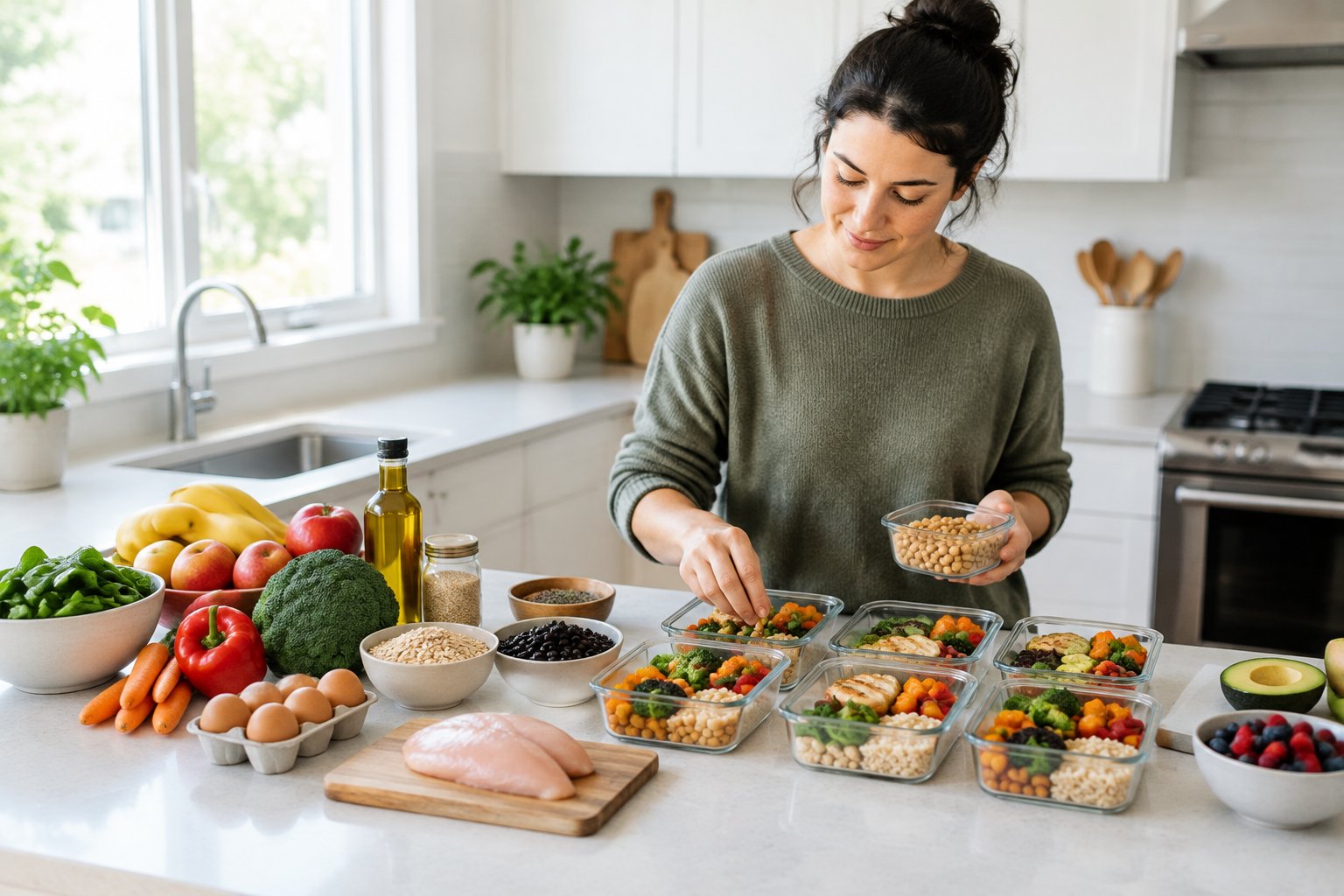
A short grocery list turns into a full week of meals through meal planning that reuses the same core ingredients across different dishes. The trick isn’t variety for its own sake; it’s picking a handful of bases and proteins that can be recombined into meals that don’t taste repetitive.
The 7-Day Meal Rotation
Build the week around two or three proteins and two or three starches, then rotate the pairing and the sauce. Chicken with rice one night becomes chicken fried rice two nights later; the same canned beans go into a grain bowl on Monday and a quick soup on Thursday.
Choosing recipes that share overlapping ingredients is especially useful for a one-person household, since a specialty ingredient bought for a single recipe often goes unused afterward, according to a guide on grocery shopping for one from Feds Feed Families.
A Sample Week in Practice
A practical week might look like this:
- Monday: Baked chicken thighs, roasted potatoes, spinach salad
- Tuesday: Lentil and canned tomato soup with bread
- Wednesday: Fried rice using leftover chicken, frozen vegetables, and an egg
- Thursday: Pasta with canned tomatoes, olive oil, and canned tuna
- Friday: Black bean and rice bowl with cumin
- Saturday: Omelet with spinach and leftover vegetables
- Sunday: Peanut butter oats for breakfast, a repeat of whichever dinner held up best in the fridge
The Cook-Once, Eat-Twice Rule
A little meal prep goes a long way when cooking for yourself. Cook proteins and grains in batches sized for two meals, not one.
Batch cooking brown rice or fluffy quinoa provides ready bases for quick lunches. A pot of rice or roasted chicken thighs becomes dinner one night and lunch two days later, cutting cooking time significantly.
Consistent meal prep also leaves you with reliable leftovers, saving you from spending money on takeout on busy evenings.
How Can You Waste Less Without Spending More?
Learning how to reduce food waste for one person comes down to portioning and storage habits more than spending less at checkout. Single-person households often pay a higher per-unit price for smaller packages specifically to avoid throwing food away, since most packaging is sized for three or more people, according to a breakdown of single-person grocery spending from Feds Feed Families.
When you actively reduce food waste, you stretch your weekly grocery budget and get full value from everything you buy.
Five Habits That Keep Food Out of the Bin
A handful of repeatable habits matters more than any single purchase:
- Portion and freeze proteins immediately. Split a family-sized meat pack into single-meal bags the day you buy it, before anything sits too long in the fridge.
- Buy loose produce over pre-bagged. Picking three loose apples instead of a large bag lets you buy only what you’ll finish, often saving money in the process.
- Keep a go-to “use it up” meal. A stir-fry, soup, or frittata that absorbs leftover vegetables and small amounts of protein gives those odds and ends a purpose before they spoil.
- Lean on the freezer aisle for vegetables and fruit. Frozen produce lets you cook exactly the portion needed for one meal while the rest stays shelf-stable.
- Shop smaller and more often if a big weekly haul keeps going to waste. A smaller trip plus a quick midweek stop for fresh items avoids buying more perishables than you’ll use before the next trip.
Shop for Value, Not Just the Lowest Unit Price
Store brands and seasonal produce typically cost less without a drop in quality. Digital coupons through a grocery store’s app can trim a bill further on items already on your list.
Choosing store brands for dry staples like rice, oats, and canned beans delivers consistent savings every week.
Value here means buying a size you’ll finish, not necessarily the cheapest price per ounce on the shelf. A smaller, pricier container of yogurt that gets fully eaten beats a bulk tub that’s half-wasted by its sell-by date.
How Do You Extend the Plan Beyond One Week?
A one-week minimalist grocery list scales to two weeks or a month by separating what needs weekly refills from what can be bought once in bulk. Pantry staples like rice, oats, and canned goods last for months, so they don’t need repurchasing every trip the way fresh produce and dairy do.
Adjusting Quantities for Two Weeks
For two weeks, double the shelf-stable items (rice, pasta, canned beans, canned tomatoes) but keep fresh produce and dairy on a weekly rhythm. Buying two weeks of spinach or milk upfront usually means throwing half of it away by the second week, which defeats the purpose of planning ahead in the first place.
Heartier items like apples and carrots easily keep into the second week. Delicate greens and dairy, however, are best replenished weekly to keep meals fresh.
A Monthly Pantry Shop with Fresh-Food Refills
A monthly grocery list for one person works best as a two-tier system: one larger trip for pantry and freezer staples that last the full month, and shorter weekly stops for produce, eggs, and dairy. This mirrors how a setting up a minimalist budget approach treats fixed versus variable costs: lock in the stable basics once, then adjust the smaller, perishable spending week to week based on what’s actually left in the fridge.
Keep What You Use, Skip What You Do Not
A minimalist grocery list for one person is a short, repeatable set of pantry staples, fresh produce, and proteins sized to the meals you’ll actually cook. Rice, oats, canned beans, eggs, and a rotating protein or two cover most of a week’s dinners when paired with a handful of flavor basics like olive oil, soy sauce, and cumin.
The habits that make this work are ordinary ones: portioning meat before it sits too long, keeping a use-it-up meal in rotation, and buying produce sizes that match how fast you’ll eat them. None of it requires an empty pantry or a rigid budget, just a list sized to one person’s actual week. That same intentional-choices approach extends naturally into other parts of a minimalist lifestyle, where buying less of the right things tends to beat buying more of everything.
Frequently Asked Questions
What should I include on a basic grocery list for one person?
A basic list should cover one or two grain bases (rice, pasta, or oats), a few proteins (eggs, canned beans, and one fresh protein like chicken), produce split between quick-spoiling greens and hardy items like apples, a small dairy selection, and a few flavor basics like olive oil and soy sauce. This combination supports a full week of varied meals without excess.
What is the 5-4-3-2-1 rule for groceries?
The 5-4-3-2-1 rule is a shorthand some shoppers use to size a basic weekly list: roughly 5 produce items, 4 protein portions, 3 grains or starches, 2 dairy items, and 1 flavor or sauce item. It works as a quick mental checklist rather than an exact formula, and quantities should still flex based on how many meals you’re actually cooking that week.
Can one person keep a weekly grocery bill around $50?
A $50 weekly budget is achievable for one person when the list leans on pantry staples like rice, beans, and eggs alongside store brands and seasonal produce.
Relying on store brands for staple ingredients and buying only what fits your planned meals helps keep costs down and works to reduce food waste over the course of the week.
How do I shop for one if I rarely cook?
Lean on shelf-stable and quick-prep items: canned tuna, canned beans, eggs, plain yogurt, and a few frozen vegetables that need minimal effort. These foods hold for days or weeks, so there’s little pressure to use everything immediately, and a short list avoids the waste that comes from buying for meals you end up skipping.
Should I buy fresh or frozen vegetables when shopping for one?
Both have a place: fresh produce works well for items you’ll eat within a few days, while frozen vegetables let you cook exactly the portion needed for one meal without the rest spoiling. Keeping a bag or two of frozen vegetables alongside a smaller rotation of fresh produce covers more meals with less risk of waste.