
Your 30s tend to bring more stuff, more bills, and more things pulling at your attention, all at once. A new job, a bigger apartment, maybe a kid or a mortgage. The habits that worked in your 20s often stop keeping up.
The most useful minimalist habits to start in your 30s are small, repeatable ones: a nightly reset, one-in-one-out, a standing donation box, one automated savings transfer, and a weekly money check-in. None of these require a weekend of purging or a strict new identity. They work because they’re small enough to actually stick.
This isn’t about owning less for its own sake. It’s about freeing up energy for the parts of your life that actually need it: your family, your work, your health, your weekends. If you’re looking for a place to start, pick one habit below and give it two weeks before adding another.

Table of Contents
Make Your Home Easier to Maintain
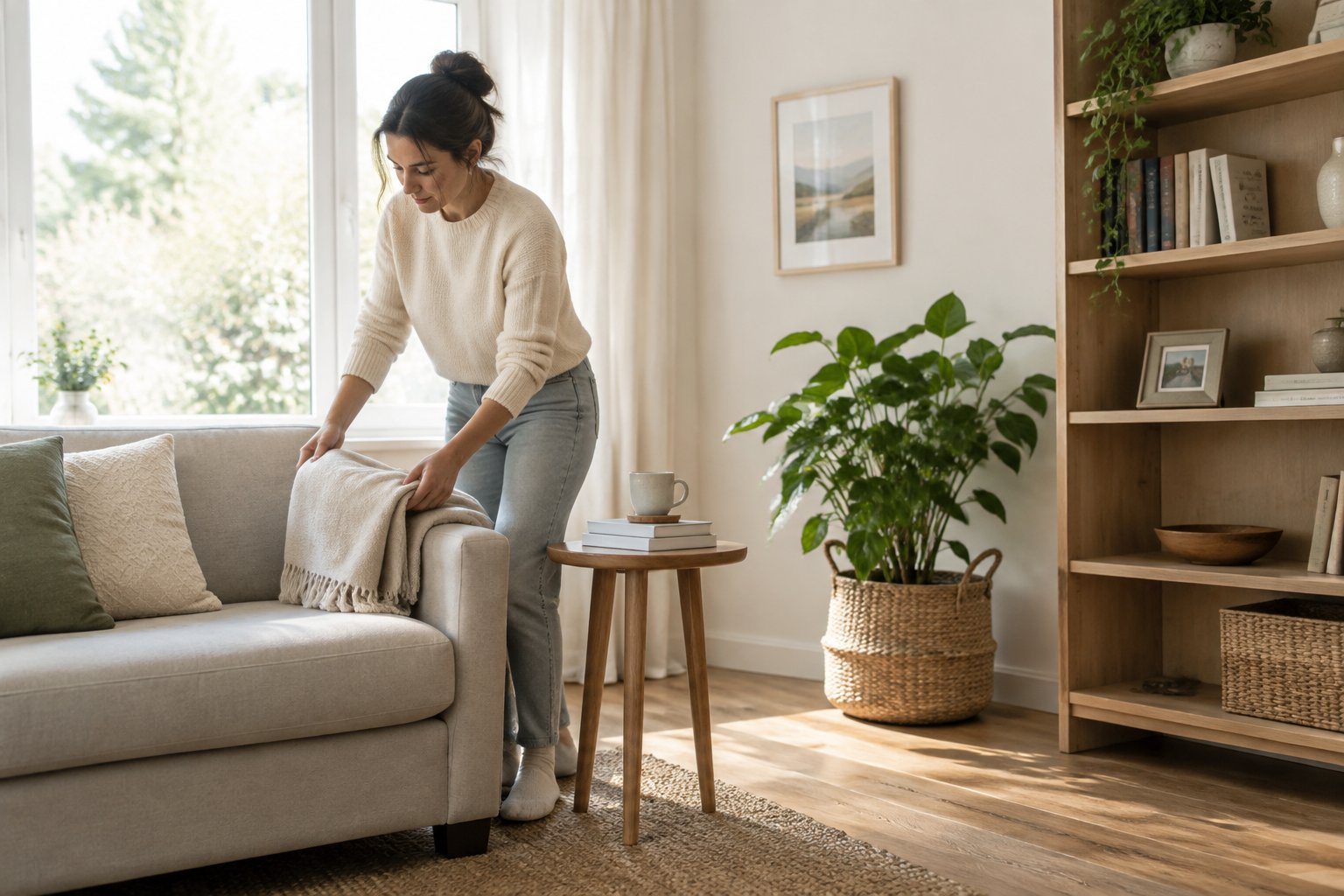
A minimalist home stays simple when you build maintenance into your routine instead of treating decluttering as a once-a-year event. Three habits make the biggest difference: a nightly reset, a one-in-one-out rule, and a donation box that’s always ready to go.
Try a 10-Minute Nightly Reset
Spend 10 minutes each night putting things back where they belong: dishes away, mail sorted, shoes by the door. This keeps small messes from turning into weekend-long cleanups.
Pick one trigger, like after dinner or before brushing your teeth, so the habit attaches to something you already do. A kitchen counter and a car dashboard are good places to start since clutter builds up fast in both.
Practice One-In, One-Out Across Your Life
When something new comes into your home, something similar leaves. This applies to clothes, kitchen gadgets, and toys just as much as books or decor.
It stops the slow buildup that turns closets and garages into overflow storage. You don’t need to apply it to everything on day one. Start with one category, like shoes or coffee mugs, and expand from there.
Keep a Donation Box Ready
Keep a box or bag in a closet or your car at all times. When you notice something you no longer use, like a shirt that doesn’t fit or a toy your kid outgrew, drop it in right away instead of setting it aside to “deal with later.”
Once it’s full, drop it off. This turns decluttering into an ongoing habit instead of an overwhelming project, and it helps with sentimental items too since you can sit with the decision for a few days before the box leaves the house. For more on building these systems into your space, the ultimate guide to minimalist home organization covers room-by-room approaches.
Paper clutter deserves its own small system: a single tray for mail that needs action, checked weekly. If you want a fuller framework for easing into these changes, 7 simple ways to sample living with less is worth a look.
Simplify Money and Buying Decisions

Minimalist money habits reduce decision fatigue by putting routine choices on autopilot and slowing down the ones that matter. Three habits cover most of it: automating a bill or savings transfer, holding a short weekly check-in, and shifting how you think about purchases.
Automate One Bill or Savings Transfer
Set up autopay for one bill, or automate a transfer into savings right after payday. This single change protects you from late fees and makes saving happen before you have a chance to spend the money elsewhere.
A “pay yourself first” approach, prioritizing savings goals before spending on wants, is a habit stash wealth recommends for building financial security in your 30s. You don’t need to automate everything at once. Start with your highest-priority bill or a retirement contribution, then add more over time.
Hold a Weekly Money Minute
Check your account balances and recent transactions for a few minutes each week. This habit catches errors, overdraft risks, and forgotten subscriptions before they become bigger problems.
It’s also the easiest time to cancel unnecessary subscriptions you forgot you had. If weekly feels like too much at first, try it monthly and build from there. For a more structured approach, setting up a minimalist budget walks through the basics.
Choose Buy-It-for-Life Thinking Over Impulse Purchases
Before buying something, ask if it’s built to last and if you’ll still want it in a year. This is quality over quantity in practice: fewer purchases, chosen more carefully, instead of a steady stream of things that wear out or go unused.
Keeping a simple “want” list and revisiting it every few weeks before buying is a tactic porte suggests for resisting impulse purchases. It works because most wants fade with a little time. See the 5 steps to streamlining your financial management for more on building this into a full system.
Protect Your Time and Attention
Your calendar and your phone create as much clutter as your closet, and protecting your attention takes the same small, repeatable habits as decluttering a room. A Sunday reset, one digital boundary, and a habit of saying no cover most of what pulls at your focus during the week.
Use a Sunday Reset to Plan the Week
Spend 15 to 20 minutes on Sunday looking at your week ahead: meals, appointments, and anything that needs prep. A little meal planning here prevents the daily “what’s for dinner” scramble that eats up mental energy.
This isn’t about building a rigid schedule. It’s a quick check-in so you’re not caught off guard by Wednesday.
Set One Digital Boundary
Pick one boundary, like no phone at the dinner table or a set time to check email, and stick to it. Digital clutter builds up the same way physical clutter does: one app, one notification, one newsletter at a time.
Unsubscribing from newsletters you never read and muting group chats you don’t need are small digital declutter wins. If your social media usage feels heavier than you’d like, a short digital detox, even just one evening a week, can reset how it feels to be online. For more on this, minimalism in daily life looks at digital habits alongside everyday ones.
Say No to One Unnecessary Commitment Each Month
Look at your calendar and find one commitment that doesn’t add much value, then decline it or let it go. This isn’t about becoming antisocial. It’s about making room for the plans and people that genuinely matter to you.
Saying no without over-explaining is a habit worth practicing, since guilt often does more damage than the actual decline. Mental clutter from an overbooked calendar tends to fade faster than people expect once a few commitments are cleared. Prioritizing experiences over things also means being selective about which experiences you say yes to.
Build a Sustainable Foundation Beyond Your Stuff
A minimalist lifestyle holds up over time when it includes your body and mind, not just your belongings. Simple health baselines, a realistic way to start, and a clear sense of what minimalism in your 30s doesn’t require all matter here.
Establish Simple Health Baselines
Your 30s are a strong decade to build basic health habits since they set the foundation for decades ahead, according to Stanford Medicine. Strength training at least twice a week, walking around 7,000 steps a day, and getting more than seven hours of sleep a night are the habits Stanford experts point to most often.
None of this requires a gym membership or a meal plan. A short walk after dinner, two bodyweight workouts a week, and a consistent bedtime cover the basics. Reducing mental clutter and practicing gratitude, even a single line in a journal each day, supports the same goal from a different angle.
How to Start Without Overhauling Your Life
Pick one habit from this article and try it for two weeks before adding another. Trying to adopt a nightly reset, a budget overhaul, and a digital detox all in the same week usually backfires.
A 30-day minimalism challenge or decluttering challenge can work for some people, but it’s not required to see change. Slow, steady habits tend to stick better than a sprint with a deadline attached. For a mindset-first approach, how to adopt a minimalist mindset is a useful next read.
What Minimalism in Your 30s Is Not
Minimalism doesn’t mean an empty home, a capsule wardrobe you’re forced into, or getting rid of things you actually use. It’s not a strict aesthetic or a countdown to owning as few items as possible.
Useful possessions that serve your life, from kitchen tools you use weekly to gear for a hobby you love, don’t need to go anywhere. The goal is clarity and ease, not an empty room for its own sake.
Small Habits Make Room for What Matters
Intentional living in your 30s comes down to a handful of small, repeated choices rather than one big overhaul. A nightly reset, a donation box, an automated transfer, a weekly money check-in, and one digital boundary are enough to start reshaping how your home, finances, and time feel day to day.
Minimalism doesn’t ask you to give up what you love or chase an empty aesthetic. It asks you to notice what’s adding friction and quietly remove it, one habit at a time. The payoff shows up in small ways: an easier Monday morning, a calmer bank account check-in, a weekend that doesn’t disappear into chores.
Frequently Asked Questions
Which minimalist habit should I start with in my 30s?
Start with the 10-minute nightly reset since it requires no planning and shows results within a few days. Once it feels automatic, add a second habit like the one-in-one-out rule or an automated savings transfer.
Do I need to get rid of sentimental items to be a minimalist?
No, sentimental items don’t need to go anywhere if they genuinely matter to you. Minimalism is about being intentional with what you keep, not forcing yourself to part with things tied to real memories.
What is the 90/90 rule for minimalism?
The 90/90 rule asks whether you’ve used an item in the last 90 days or will use it in the next 90 days. If the answer is no to both, it’s a candidate for your donation box.
Is a 30-day minimalism challenge worth trying in your 30s?
A 30-day minimalism challenge can work well if you like structure and a clear timeline. It’s not required, though. Steady, smaller habits like a weekly money minute or a nightly reset often fit a busy 30-something’s life more realistically than a month-long sprint.
How can I practice minimalism when I share a home with others?
Focus on your own belongings and routines first, like your closet or your side of the bathroom counter. Shared spaces work best with a conversation about priorities, since minimalism works better as an invitation than a rule imposed on a partner, roommate, or kids.