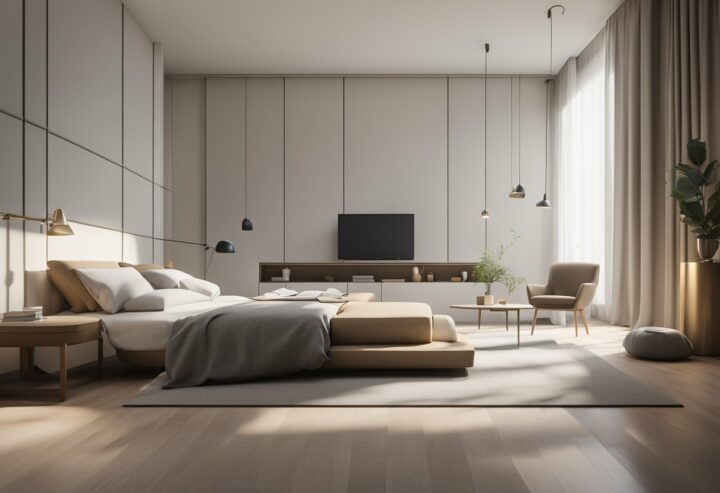
For a bedroom you want to keep simple and easy to use, the best furniture for minimalist bedrooms is a supportive platform bed, reachable bedside storage, and a dresser or wardrobe sized to your clothing. You get a practical foundation for sleeping and dressing, with clear floor space for moving around.
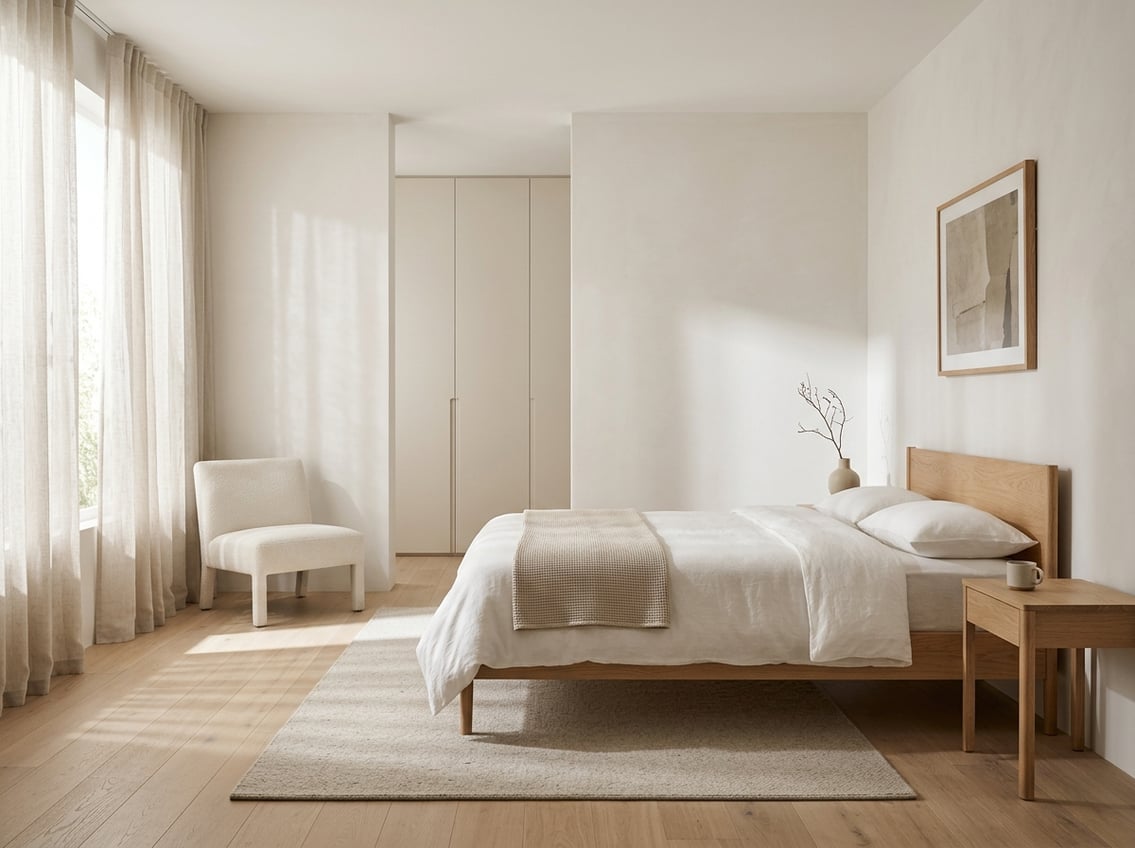
Your minimalist bedroom starts with the routines you want to make easier. A comfortable bed height, drawers that open fully, and somewhere to put your glasses contribute more to everyday convenience than a perfectly matched room.
You can approach minimalism using furniture you already own. As you consider minimalist bedroom furniture ideas, start by identifying the piece that creates the most friction in your day, then decide whether rearranging, repairing, or replacing it would help.
Table of Contents
Which Bed Frame Fits Your Space and Daily Needs?
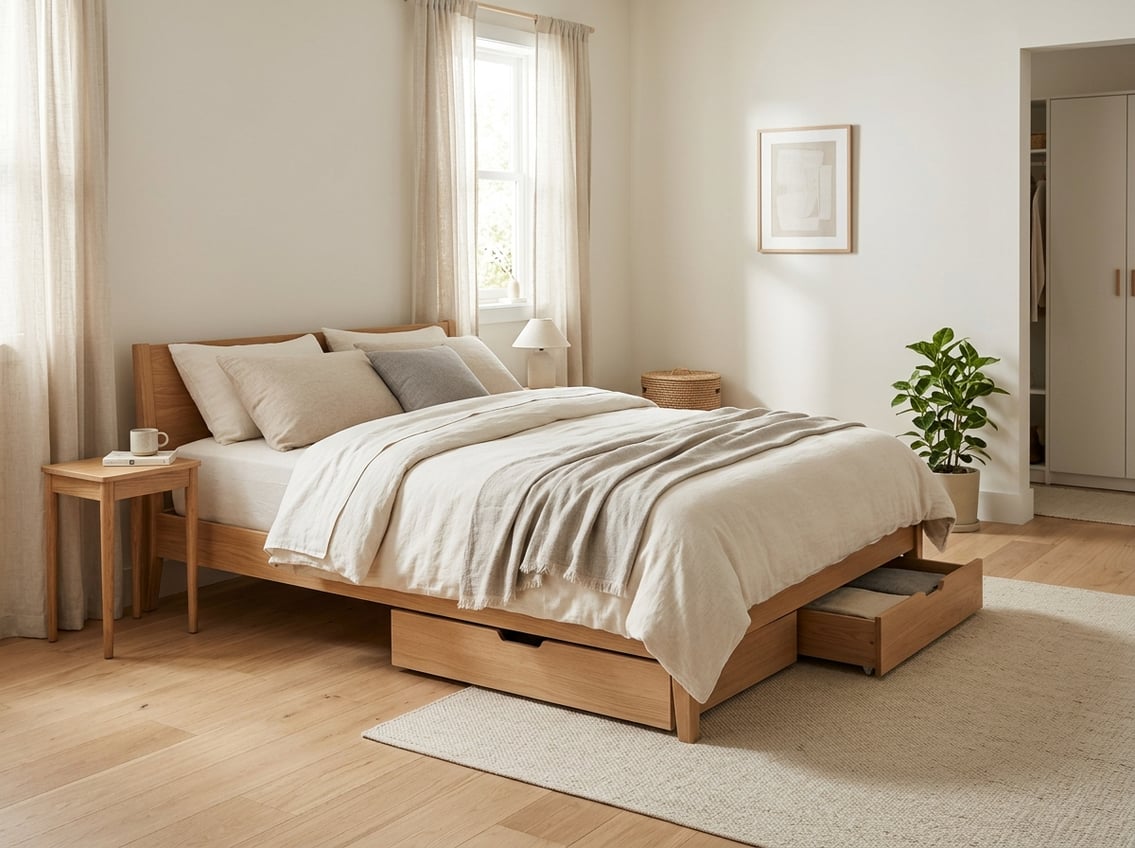
Choose a bed frame that supports your mattress correctly and lets you get in and out comfortably. Your available floor space and storage needs will narrow the choice between a straightforward platform bed and a frame with additional features.
Platform Beds for a Simple Foundation
You get an uncomplicated foundation with a platform bed, which supports the mattress on slats or a solid deck. Before buying, check your mattress manufacturer’s requirements for slat spacing, ventilation, and center support.
Look closely at the frame’s outside dimensions, including any projecting ledge. A wide platform edge takes up walking space and creates a hard corner to navigate, even when the mattress itself fits comfortably.
Low-Profile Frames vs. Comfortable Bed Height
A low-profile bed leaves more wall visible above your bedding, which helps a compact room feel less crowded. Your comfort still comes first: assess the finished height with the mattress included, then try sitting down and standing up without pushing heavily through your arms.
If you prefer a very low sleeping surface, consider floor bed options for adults alongside a low-profile bed frame. Check how you will ventilate beneath the mattress and reach the floor for cleaning, especially if bending or kneeling is difficult.
Storage Beds When Closet Space Is Limited
Choose a storage bed when you have a defined need for concealed storage, such as spare bedding or seasonal clothing. You gain storage within the bed’s footprint, although the base will have a heavier appearance than an open-legged frame.
Before choosing drawers, tape out their fully extended position beside your proposed nightstands. With a lift-up model, check the lifting effort, the mechanism’s instructions, and whether you can retrieve belongings safely. Keep frequently used clothing somewhere you can access without lifting the mattress.
Upholstered Headboards and Simple Canopy Frames
An upholstered headboard gives you a padded surface for reading in bed. Choose fabric you can maintain, and check whether the cover is removable or the headboard is replaceable separately from the frame.
A simple canopy bed suits you if you enjoy a defined outline around the bed and have adequate overhead clearance. Measure around ceiling fans and hanging lights before committing. Keep the surrounding furniture restrained enough that you can move easily around the posts.
Choose Bedside and Clothing Storage Around What You Own
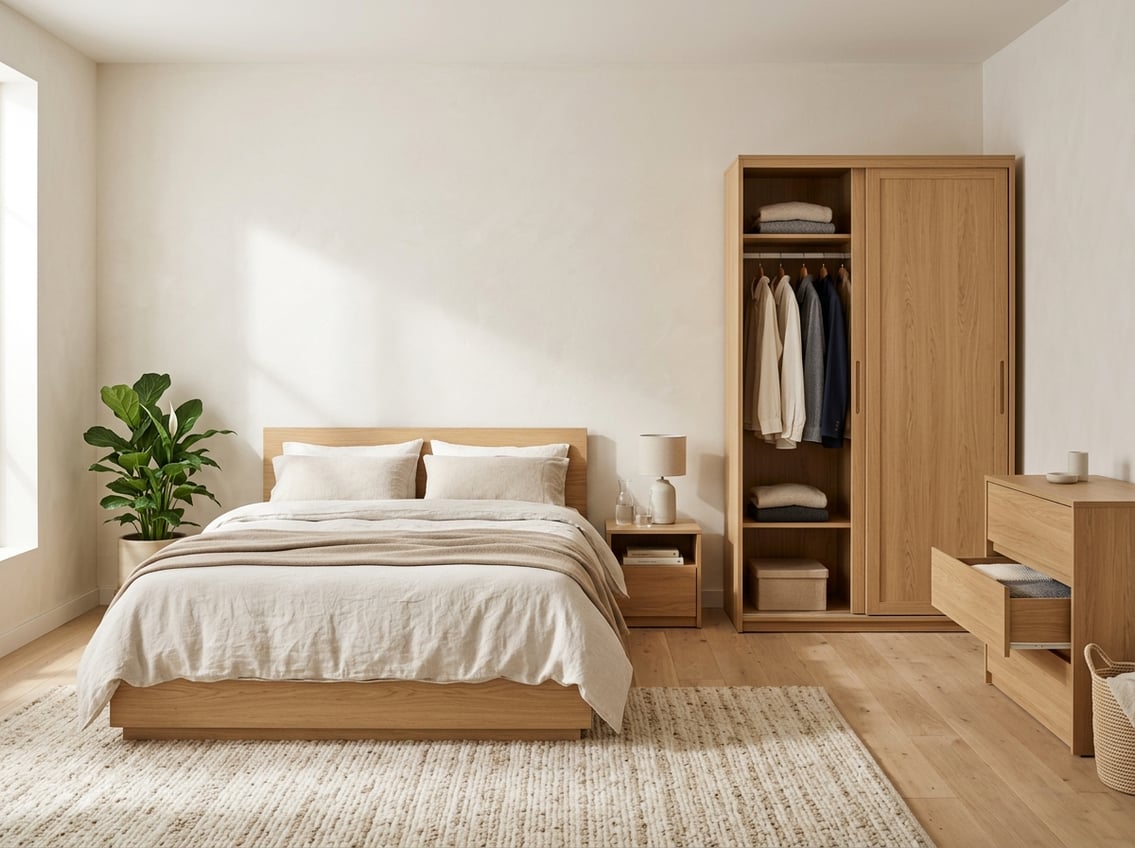
Choose bedroom storage after sorting the belongings you intend to keep in the room. You will make a more useful purchase when drawer capacity and hanging space match your possessions.
Floating Nightstands vs. Freestanding Bedside Tables
A floating nightstand gives you an unobstructed floor beneath your bedside essentials. You also get control over mounting height, which helps you place the surface within comfortable reach from your mattress.
Before installing a wall-mounted nightstand, check wall construction, suitable fasteners, and the manufacturer’s load limit. If you rent, confirm permission to drill. Choose a freestanding bedside table when you expect to rearrange your room or need flexibility as your bed height changes.
With either style, check that you can reach the contents without twisting awkwardly. A shallow drawer gives your small essentials a home while leaving the surface available for a drink or reading light.
Streamlined Dressers for Folded Clothing
Choose a streamlined dresser by checking its usable drawer interiors. Deep-looking fronts sometimes conceal shallow boxes, so measure your folded clothing and compare it with the internal dimensions.
Open every drawer when inspecting furniture in person. You want smooth movement, secure handles, and a stable cabinet; follow the manufacturer’s anchoring instructions before use. When you choose storage around your belongings, you avoid buying a large dresser with compartments that suit very little of what you own.
Wardrobes for Hanging Clothes and Concealed Storage
A wardrobe earns its floor space when your closet lacks hanging capacity or your bedroom has no closet. Check internal hanging height against your longest garments, and confirm that shelves adjust to the items you plan to store.
Allow room for hinged doors to open and for you to stand in front comfortably. Sliding doors require less opening space, although you access only part of the interior at a time. Sort your wardrobe essentials before choosing the interior layout.
Floating Shelves for Frequently Used Essentials
Use floating shelves for a small selection of belongings you reach for regularly, such as your current book or a bedside clock. You gain accessible storage, but you also take on exposed surfaces that need dusting.
Mount shelves within easy reach and follow the specified fixing requirements. Keep heavy or breakable objects away from positions above your pillow. Among bedroom storage ideas, shelves work best when you have a clear use for the surface before installation.
Which Finishing Pieces Add Comfort Without Clutter?
Add finishing pieces when they support an activity you already enjoy or make an existing routine more comfortable. You can keep your minimalist bedroom decor personal through useful seating and a few considered accents.
An Accent Chair or Ottoman Only When You Need Seating
Choose an accent chair if you regularly read, put on shoes, or need a place to sit away from the bed. Try the seat depth and arm height before buying, and check that standing up feels comfortable.
For a reading nook, place your bedroom chair beside accessible task lighting. An ottoman suits shorter seated tasks or putting your feet up, provided its height and stability work for you. In a shared sleeping and living space, furniture suited to a studio apartment helps you plan seating across both areas.
A Floor Mirror That Fits Your Dressing Routine
Choose a floor mirror when you use a full-length reflection while dressing. Check the view from where you will stand, including whether nearby furniture blocks your lower half.
Secure the mirror using its specified anti-tip hardware, even if its design allows it to lean. If you have little spare floor space, a securely mounted wall mirror gives you the same dressing function. Position it where reflected daylight feels comfortable from the bed.
Wall Sconces and Pendant Lights That Free Bedside Surfaces
Wall sconces give you bedside light while keeping your table available for essentials. Choose adjustable fittings if you read in bed, and test the proposed location from your normal seated position before installation.
A pendant light beside the bed also frees the surface, but its hanging position needs careful planning. Keep pendant lights clear of your head and walking route. Use a qualified electrician for hardwired fittings; with plug-in sconces, secure cords away from bedding and foot traffic.
Simple Textiles and a Plant for Warmth
Use texture to make your room comfortable without adding extra furniture. Linen bedding gives you a relaxed, creased appearance; cotton suits you if you prefer a smoother finish. Check care instructions against the laundry routine you are willing to maintain.
A statement plant works when your available light and care habits suit its needs. With minimalist bedroom plant decor, choose a location that protects your furniture from drainage water. Check pet safety before bringing a plant home.
How Do You Choose Pieces That Work Together and Last?
Start with measurements and construction quality, then coordinate the pieces through a limited range of finishes. Your minimalist bedroom furniture will be easier to live with when every purchase fits both the room and your maintenance habits.
Measure Walkways, Drawer Clearance, and Window Access
Measure your room before choosing bedroom furniture, including door swings and fixed features such as radiators. Mark each proposed piece on the floor with painter’s tape, using its full external dimensions.
Test the layout through your normal movements:
- Walk from the doorway to each side of the bed you use.
- Mark the space occupied by fully open drawers.
- Check access to curtains, outlets, and closet doors.
- Allow turning space for any mobility aid you use.
- Measure the delivery route through hallways, stairs, and doorways.
Keep furniture clear of required emergency exits and heating equipment. Preserve access to windows so you can operate coverings and enjoy natural light without reaching over a cabinet.
Coordinate Neutral Colors, Earth Tones, and Natural Materials
Choose a neutral color palette that works with your existing floor and wall finishes. You can use cream with warm wood, or combine charcoal with muted earth tones if you prefer a darker room.
When you create a minimalist color palette, check samples in your bedroom during daylight and under your evening lighting. You do not need identical wood finishes throughout; repeat a compatible undertone or hardware finish to connect individual pieces.
Use warm minimalism through tactile choices such as a woven shade or a soft bed cover. Keep daily care in mind when selecting natural materials, particularly unfinished surfaces that mark easily.
Buy a Bedroom Set or Choose Individual Pieces?
Choose a bedroom set when every included piece fits your layout and fills a specific need. You gain consistent finishes and coordinated proportions, although a package becomes poor value when it includes furniture you have no use for.
Individual purchases give you more control over storage capacity and scale. You might pair an existing wooden dresser with a simple upholstered bed, then connect them through similar bedside hardware.
Before ordering a set, price only the pieces you would choose independently. For a mixed room, compare dimensions and finish samples together so you can judge how the furniture relates before delivery.
Keep Useful Furniture and Buy Durable Replacements Mindfully
Keep your existing furniture when it remains stable, comfortable, and suitable for your room. A loose handle or worn drawer runner deserves a repair assessment before you replace the entire piece.
When buying, inspect the parts that receive daily wear. Check how joints connect, whether drawer hardware is replaceable, and whether the frame disassembles for a future move. Solid wood and well-made plywood both deserve consideration; material labels alone give you limited information about construction.
For budget-friendly minimalist bedroom furniture, assess secondhand pieces with the same care. Inspect hidden surfaces for moisture damage or pest evidence, check recalls where applicable, and confirm that necessary assembly and anchoring hardware is available.
Keep the Furniture That Supports Your Everyday Life
Keep the pieces that make your minimalist bedroom comfortable to sleep in, easy to dress in, and straightforward to maintain. You can begin with your current bed and essential storage, then address specific problems as they become clear.
Your approach to sustainable minimalism starts with useful furniture already in your home. Before purchasing anything, check whether a repair or a different position would solve the problem.
You can put Live the Minimalist Lifestyle’s approach to intentional living into practice today: measure the area that feels crowded, clear an unused surface, or inspect a drawer that needs attention. Make your next furniture decision after that small task.
Frequently Asked Questions
Choose minimalist bedroom furniture around your daily routines and the space you have available. Use these quick answers when checking a potential purchase against your room.
What furniture does a minimalist bedroom actually need?
You need a suitable bed and enough accessible storage for the belongings you keep in your bedroom. Add a bedside surface if you use one; if your closet already holds your clothing comfortably, you can skip a separate dresser.
What kind of furniture is best for a tiny bedroom?
Choose furniture with compact external dimensions and storage you can access within your available clearances. A narrow bed frame and shallow bedside table preserve walking space, while under-bed storage works when you have room to open it.
How can I furnish a minimalist bedroom on a budget?
Start by keeping useful bedroom furniture and buying only for an unmet need. Inspect secondhand options carefully, include delivery costs in your budget, and consider replacing worn hardware before replacing a whole cabinet.
What bedroom furniture is timeless?
For a long-lived look, choose simple shapes in finishes you already enjoy, such as wood or painted neutrals. Give equal attention to repairable construction and replaceable hardware so you can maintain the furniture as it ages.
How do I style a minimalist bedroom without making it feel empty?
Give your minimalist bedroom design warmth through bedding texture, comfortable lighting, and a personal object you enjoy seeing. Leave enough clear surface around those choices that you can use and clean the room easily.