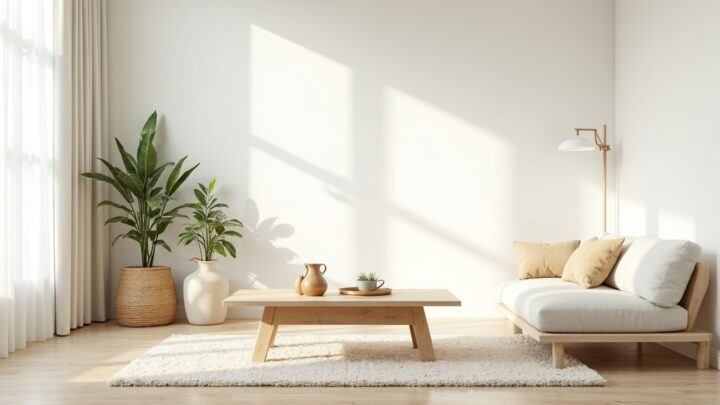
To understand what is modern minimalist style, consider how every piece in a room earns its place. It uses clean lines, open floor space, a restrained color palette, and natural materials.
When exploring modern minimalist interior design, you will notice that simplicity guides every choice. Every element serves an authentic purpose.
Modern minimalist style is an interior design approach built on “less is more”: simple, functional furniture, uncluttered surfaces, plenty of natural light, and a limited palette, arranged so that the things you use and love stand out. As a popular minimalist design style, it borrows its look from modern design and its purpose from minimalism, the habit of keeping what adds value and letting go of the rest.
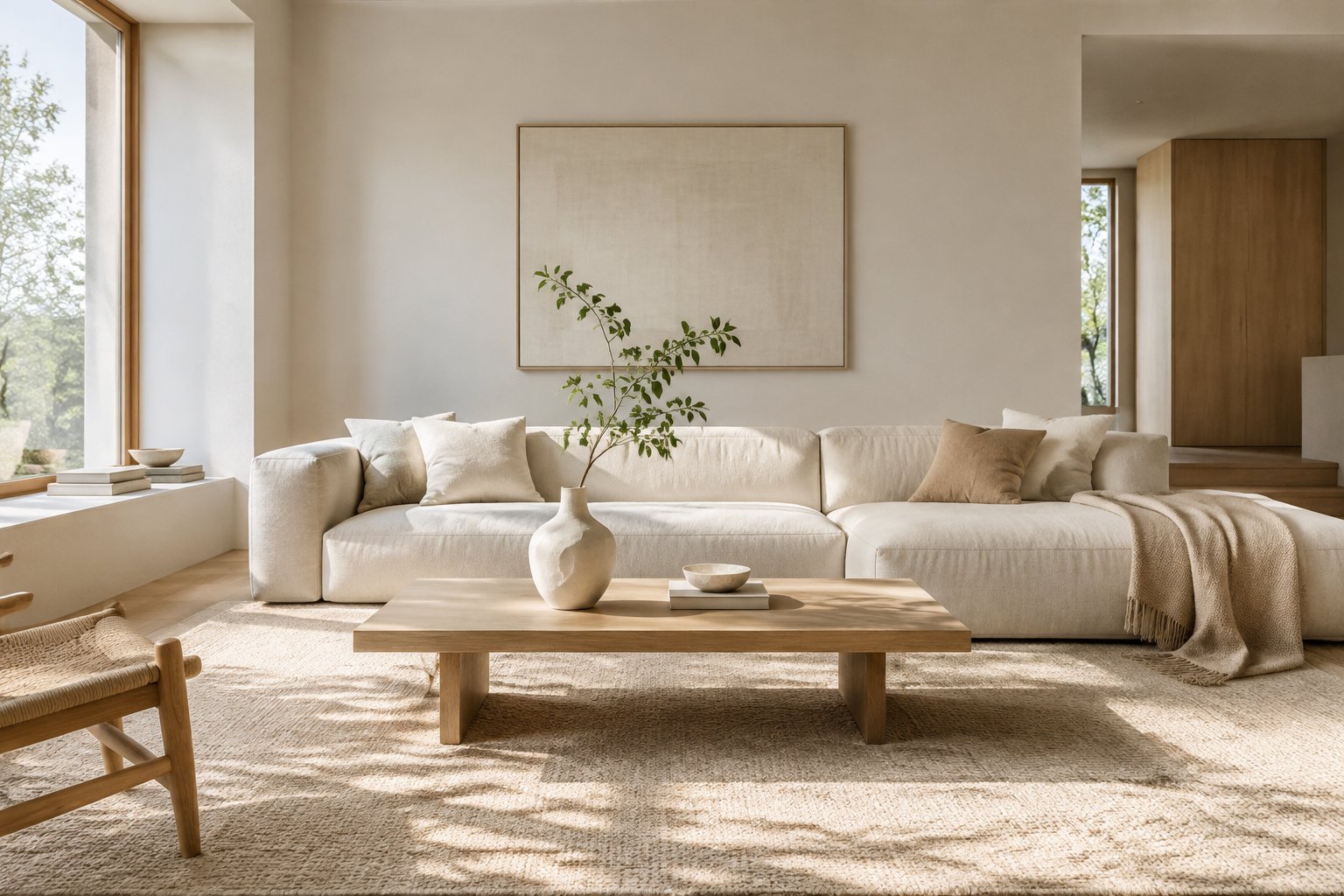
The good news is that you don’t need a new house, a renovation budget, or a white-walled showroom to get there. Most modern minimalist interior design starts with editing what you already own. A sofa with a simple design and clean profile, one clear coffee table, and a lamp placed where you read can do more than a room full of new purchases.
The style also connects to intentional living. When you choose fewer, better things, uncluttered spaces create a calming atmosphere that makes your home easier to clean and navigate.
Embracing a minimalist lifestyle helps you prioritize experiences and peace of mind over possessions. If you’re ready to make your space work harder for you, start with one room this week and use the ideas below as your checklist.
Table of Contents
Key Takeaways
- Modern minimalism pairs clean, functional design with deliberate restraint.
- You can apply it room by room using furniture and minimalist decor you already own.
- The style lasts when you build simple habits for storage and buying.
What Makes an Interior Feel Modern and Minimalist?
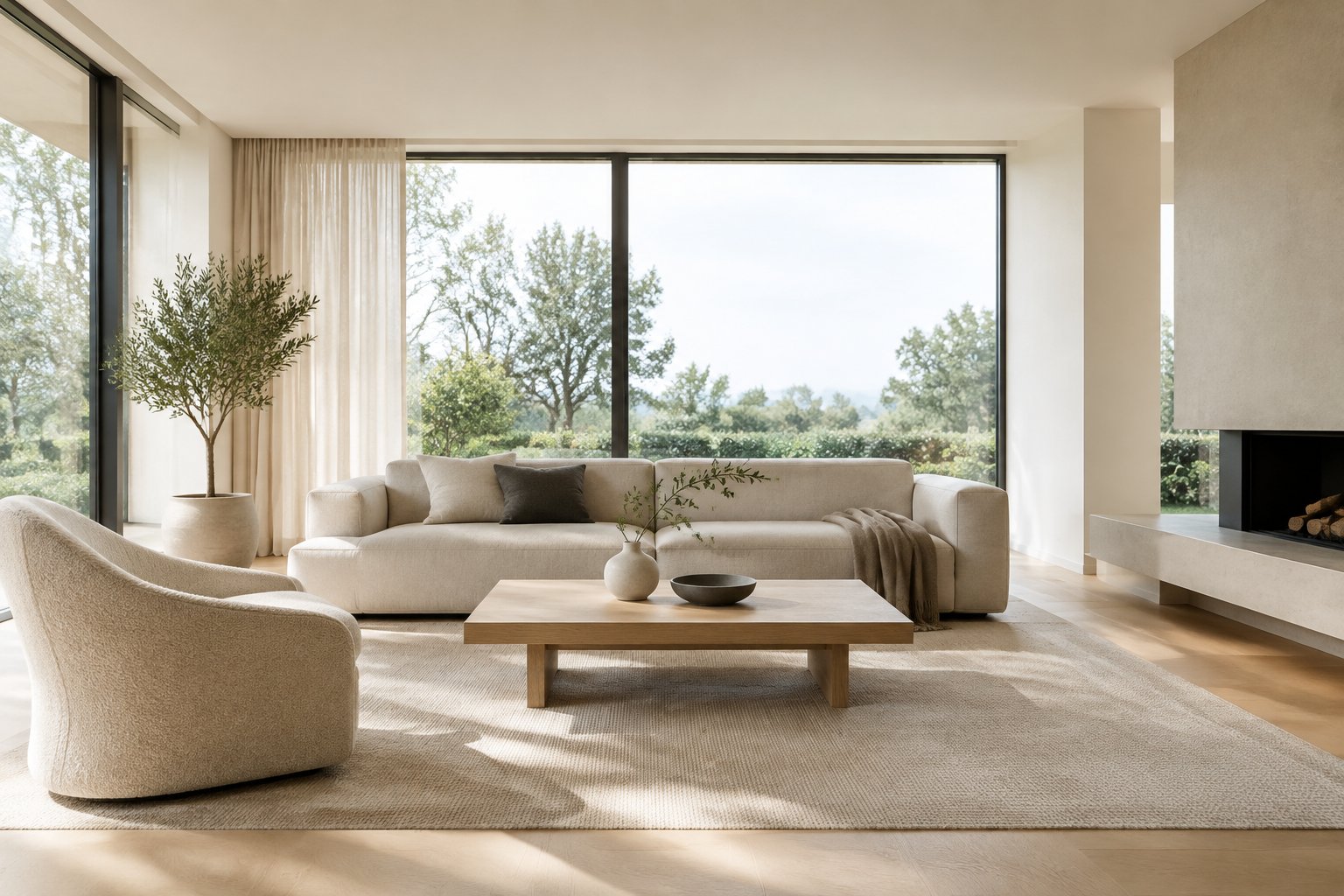
A room reads as modern and minimalist when its furniture has simple shapes, its layout leaves open floor and wall space, and its colors and materials stay consistent from one corner to the next. Each of those choices supports function first, which is why the result feels calm without feeling staged.
At its heart, modern minimalist design balances aesthetics with utility. Living by the idea that less is more makes modern spaces feel restful and grounded.
Clean Lines, Simple Forms, and Purposeful Furniture
Among the core principles of minimalist design, clean lines are the most recognizable. In practice, that means furniture with straight or gently curved edges, little to no carved trim, and no tufting or fringe. Modern style leans on horizontal and vertical lines with fewer curves, and low, horizontal furniture that sits quietly in a room.
Geometric shapes do a lot of the work here. Think of a rectangular sofa, a round dining table, or a square side table.
Pieces that feature a simple design sit comfortably in a room without competing for attention. These simple forms are easy for your eye to read, so a room with five pieces feels settled instead of busy.
Functionality and simplicity go together. The enduring concept that less is more applies directly to how many items you place in a room. Before you keep or buy a piece, ask what job it does:
- Sofa: Seats everyone who uses the room daily.
- Coffee table: Holds drinks, a book, and maybe one object you love.
- Side table: Sits within arm’s reach of a seat and holds a lamp.
- Storage piece: Closes, so the things inside disappear from view.
If a chair is never sat in, it’s taking up space a clear walkway could use. Some designers point to exactly this: noticing you always sit on the couch and don’t need the extra armchair is a minimalist decision in itself. Learning how to make functional furniture a focal point in a room lets one well-made piece carry the look.
Negative Space, Natural Light, and Easy Movement
Negative space is the empty area around and between objects: bare wall, clear floor, an open shelf. It gives your eye a place to rest and lets the pieces you keep stand out. Organizers even suggest leaving 1 to 2 inches of breathing room around folded sweaters or pairs of shoes so storage looks calm too.
Natural light is the cheapest design upgrade you have. A few ways to make the most of it:
- Swap heavy drapes for sheer panels or simple shades.
- Keep tall furniture away from windows.
- Hang a mirror across from or beside a window to bounce light deeper into the room.
- Choose neutral walls in rooms with small windows to maximize natural brightness.
Open spaces and open floor plans are common in this style, but what you need is easy movement. Aim for clear paths of about 30 to 36 inches between furniture so you can walk through without turning sideways. In a closed-plan apartment, you get the same feeling by keeping doorways clear and pulling furniture slightly off the walls where it helps conversation.
Restrained Colors and Natural Textures Without the Coldness
A neutral color palette ties the room together. Modern style typically uses white, beige, gray, and light earthy colors as main colors, with black or darker shades as accents.
A balanced neutral color scheme and neutral walls give you a quiet backdrop, and a limited color palette makes it easier for everything to match, which is what designers mean by visual cohesion.
Sticking to a limited color palette also simplifies decorating decisions. When anchored by a warm neutral color palette, the entire home feels seamless and calm.
A monochromatic color palette works the same way. You pick one color and use it in several shades. Multiple shades of a single color, like the blues in a dining space, stay visually streamlined while still showing personality. If you want help choosing, here’s how to create a minimalist color palette for your home.
Coldness creeps in when everything is smooth and hard. Natural materials fix that:
|
Material |
Where it works |
What it adds |
|---|---|---|
|
Natural wood tones |
Floors, tables, shelving |
Warmth and grain |
|
Linen and cotton |
Curtains, bedding, pillows |
Soft texture |
|
Wool or jute |
Rugs, throws |
Depth underfoot |
|
Stone or ceramic |
Vases, countertops |
Weight and variety |
|
Plants |
Any bright corner |
Life and color |
This blend of restraint and texture is often called warm minimalism, and it’s the version most people find easiest to live with.
How Can You Apply the Style Room by Room?
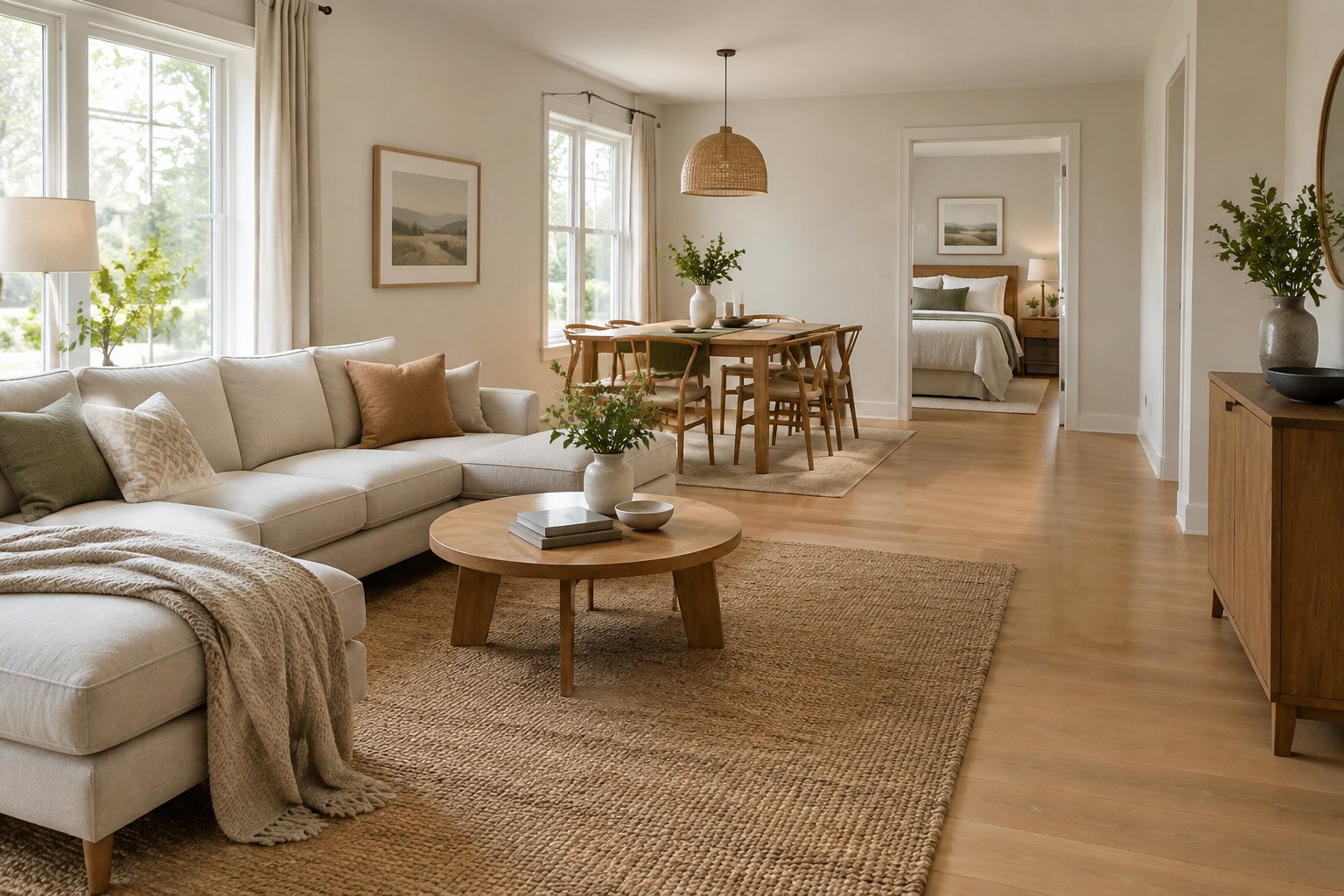
Each room in a minimalist home applies the core principles of minimalist design to its main job. That means focusing on seating in the living room, rest in the bedroom, and meal prep in the kitchen. Decide what that job is, keep what supports it, and move everything else out.
A Living Room Built Around Comfort and Connection
Start a minimalist living room with the sofa. It’s your anchor piece, so position it facing the main view, the fireplace, or the other seating, whichever matches how you use the room.
In a minimalist living room, you then add only what the sofa needs: a coffee table within reach, one side table with a lamp, and a rug large enough that at least the front legs of the furniture sit on it.
Your coffee table can showcase intentional minimalist decor as the one styled surface. Designers suggest limiting it to a tidy stack of books, a simple floral arrangement, and an object of meaning, grouped in odd numbers. Thoughtfully placed minimalist decor gives the space character without adding visual clutter.
Some reuse-first moves that cost nothing:
- Pull art from other rooms and hang one large piece above the sofa instead of a gallery wall.
- Move a dresser from a spare room into the living room as a closed media console.
- Gather throw pillows from around the house and keep only two or three in coordinating textures that match your neutral color palette.
Bookshelves fill up fast. Thin the collection first; it helps to declutter books the minimalist way before you restyle the shelves with some empty space on each one.
A Bedroom With Fewer Visual Distractions
A minimalist bedroom works best when the bed is the clear focus and the surfaces around it stay nearly empty. Keep each nightstand to a lamp, a book, and a place for your phone or glasses. If you have drawers in the nightstand, the charging cables and hand cream go inside.
Symmetry helps a bedroom feel settled with very little effort. Matching nightstands and lamps on each side of the bed create order, even when the rest of the room is simple. If your nightstands don’t match, matching lamps alone gets you most of the way.
This visual restraint produces a calming atmosphere that encourages deeper rest. When clutter stays out of sight, your mind settles more quickly at the end of the day.
Bedding is where you add warmth. Layer a duvet, a textured throw, and two to four pillows in one or two colors. Skip the stack of decorative pillows you remove every night.
The biggest source of bedroom clutter is usually clothes. A chair that collects worn-once outfits is a sign you need a hook or a small basket for in-between items. Closets and dressers deserve their own edit, and a clutter-free dressing room setup can keep clothing out of sight.
A Kitchen and Dining Room That Support Everyday Use
Your kitchen counters should hold only what you use every day. For most households, that’s a coffee maker or kettle, a cutting board, salt and oil near the stove, and maybe a utensil crock. Toasters, mixers, and blenders you use weekly fit inside a cabinet.
Test what you need before you donate. One practical approach is to box up half of your kitchen containers and store them out of reach for a month, then let go of what you didn’t miss. Run the same test with duplicate spatulas, mugs, and baking pans.
Open shelving is popular in minimalist kitchens but asks more of you. Keep it for items that look good and get used often, like everyday plates and glasses. For a softer look with wood and texture, a warm minimalist kitchen shows how natural materials keep the room inviting.
A minimalist dining room needs a table, comfortable chairs, and good light. Clear the table between meals, leaving at most a single bowl or vase.
Keeping this space clear maintains a calming atmosphere during meals. If mail and bags tend to land there, give them a designated drop tray near the entry.
How Do You Create a Home That Stays Simple?
A simple home stays simple when you declutter before you shop, give every item a home that fits your daily routine, and make buying decisions slowly. Those three habits do more than any single furniture purchase to keep clutter-free spaces from filling back up.
Declutter Around Your Needs Before Buying Anything
Decluttering comes first because you can’t plan storage or choose furniture until you know what you’re keeping. Start with the room you use most, usually the living room or bedroom, and work through one zone at a time: a drawer, a shelf, a closet.
Approaching decluttering in small stages keeps the process manageable. Regular decluttering also prevents unnecessary items from piling back up over time.
Sort into four groups:
- Keep: You use it regularly or it holds real meaning.
- Relocate: It belongs in another room.
- Donate or sell: It works but doesn’t fit your life now.
- Discard: It’s broken or worn out.
Set a limit on each session, like 20 minutes or one shelf, so you finish instead of burning out halfway. A guide to minimalist home organization helps once the editing is done.
Before you buy anything new, live with the edited room for two weeks. You’ll often find the empty spot you planned to fill looks better empty, or that a piece from another room fits perfectly.
Choose Storage and Multipurpose Pieces for Real Routines
Storage solutions work only if they match how you live. Watch where clutter piles up, then put storage right there. Keys and mail on the kitchen counter mean you need a hook and a tray by the door. Shoes near the couch mean a closed bench or basket in the living room.
Hidden storage keeps surfaces calm. Look for these multipurpose furniture options:
- Storage ottoman: Seating, footrest, and a place for blankets.
- Bed with drawers or lift-up frame: Off-season clothes and extra linens.
- Lidded baskets: Toys, chargers, or remotes, slid onto an open shelf.
- Dining bench with storage: Seating plus space for table linens.
Renters and small-space dwellers get the most from pieces that serve two jobs. Matching containers in warm textures that blend with your palette also hide visual clutter. If you need ideas, start with these storage solutions for organizing your space, and shop your own home for baskets and bins first.
Keep Meaningful Belongings and Buy More Intentionally
A minimalist lifestyle keeps the objects that matter to you. A grandparent’s bowl, a painting from a trip, or a shelf of well-loved books all belong. Give them space and good light so they read as intentional. Small, forgettable items like a holiday trinket used once are what you let go.
Quality over quantity is how a clutter-free environment lasts. When you do buy, try a few simple rules:
- Wait 30 days before any non-essential purchase over a set amount you choose.
- Replace, don’t add: something comes in, something similar goes out.
- Choose solid construction and repairable materials over trendy finishes.
- Buy secondhand first for wood furniture, frames, and ceramics.
Mindfulness ties it together. A five-minute evening reset, putting things back where they live, prevents the slow pile-up. Building a minimalist mindset makes these choices feel natural instead of forced.
Where Do the Style’s Influences Come From?
Modern minimalist style draws on several traditions at once: early 20th-century modernism, mid-century Scandinavian design, and Japanese design and aesthetics, along with the minimalist art movement that took hold after World War II. No single movement can claim it, and the version you see today blends them.
Bauhaus, Mies van der Rohe, and Modernist Simplicity
The Bauhaus movement, a German design school founded in 1919, set out to combine art with everyday function and mass production. Its designers stripped away ornament and let materials like steel, glass, and wood show their honest form. That idea, often summed up as “form follows function,” still shapes modern minimalist design.
Leaders of the Bauhaus movement believed good design should be functional, practical, and unburdened by excessive ornament. Their work with tubular steel and clean geometry continues to inspire modern interiors.
Ludwig Mies van der Rohe was one of the architects most closely associated with that school. The mantra of minimalist design, “less is more,” is a quote from Mies van der Rohe, who became a defining figure of modernism in post-war Europe and the United States. His buildings used open floor plans, large panes of glass, and simple structural grids.
As Ludwig Mies van der Rohe demonstrated throughout his architectural career, stripping away ornament exposes true structural beauty. His vision proved that proportion, clarity, and materials could carry a design effortlessly.
The word “minimalism” came later. Britannica describes Minimalism as a chiefly American movement originating in New York City in the late 1960s, marked by extreme simplicity of form. Its ideas spread from galleries into architecture and interiors.
Scandinavian and Japanese Influences Without Treating Them as Identical
Scandinavian design and Japanese design both value simplicity, but they come from different places and look different in a room.
|
|
Scandinavian design |
Japanese design |
|---|---|---|
|
Starting point |
Long, dark winters |
Traditional architecture and Zen aesthetics |
|
Light |
Maximize daylight with large windows |
Soft, filtered light through paper screens |
|
Materials |
Pale woods, wool, linen |
Natural wood, paper, stone, bamboo |
|
Mood |
Cozy, practical, family-oriented |
Quiet, contemplative, close to nature |
|
Imperfection |
Durable, everyday use |
Wabi-sabi: beauty in the worn and imperfect |
Wabi-sabi is worth knowing because it softens strict minimalism. It values a handmade mug with an uneven glaze or a wood table that shows years of use. That helps you keep objects with character instead of chasing flawless surfaces. A blend of the two cultures is often called Japandi, one of several types of minimalist interior design.
Minimalist ideas show up well beyond these two cultures. Nomadic communities, for example, have long lived with only what they can carry, for practical reasons, and their homes look nothing like a white Western living room.
How Modern Design and Minimalism Overlap and Differ
Modern design and minimalism share clean lines, neutral colors, and little ornament, which is why the terms get blended. They differ in strictness and purpose.
Modern style refers to a specific era, roughly the 1920s to 1950s, and is generally minimalist without being rigid about it. Minimalist design is stricter: an item should serve a function or be left out. A modern room might include a decorative sculpture purely for looks; a minimalist room asks whether it earns its spot.
Modern minimalism combines the two. You get modernism’s materials and shapes with minimalism’s editing.
Today, modern minimalist design brings these qualities into daily life. In modern minimalist interior design, rooms highlight architecture and purpose rather than excess ornamentation. Minimalist architecture applies the same thinking to buildings, with flat roofs, large windows, and plain facades.
Make Space for What Matters in Your Home
Modern minimalist style comes down to three practical habits: choose furniture with simple shapes and a clear job, leave open space so light and movement flow, and keep a restrained palette warmed by natural materials. Those choices make a room easier to use and easier to keep tidy.
You don’t need to start over. Edit one room, rearrange what’s left, and borrow pieces from elsewhere in your home before you buy. When you do shop, put quality over quantity and wait long enough to know you’ll use what you bring home.
A minimalist home supports intentional living because it keeps your attention on the belongings, routines, and people you value. Committing to a minimalist lifestyle frees up both mental space and daily energy.
Pick the room that frustrates you most, clear one surface today, and decide what deserves to go back on it.
Frequently Asked Questions
Can a modern minimalist home include color and personal collections?
Yes. Minimalist style works beautifully with color when built around a cohesive neutral color scheme. Grounding a space with a warm neutral color palette allows subtle accents to stand out without creating chaos.
Display collections in one designated spot, like a single shelf or cabinet. That way, your favorite items read as an intentional feature instead of scattered clutter.
What should I look for in modern minimalist furniture?
Look for functional furniture with a simple design, clean lines, a low profile, and solid construction in wood, metal, or natural fabric. Pieces with hidden storage or two uses earn extra points. Check the joints and finish, since each piece gets more attention in a sparse room.
Can modern minimalist style work in a small apartment?
It works especially well in small apartments because fewer, multipurpose pieces free up floor space. Use neutral walls, mirrors near windows, and a bed or ottoman with storage. Renters can get the look with furniture and textiles alone, with no painting or renovation needed.
Do I need an open floor plan to create a minimalist interior?
No. Open floor plans are common in the style, but closed rooms work fine when you keep pathways clear and color consistent from room to room. Matching flooring tones or wall colors across doorways creates a similar sense of flow.
What does a modern minimalist house exterior look like?
Modern minimalist architecture usually features flat or low-pitched roofs, large windows, and plain facades in materials like stucco, concrete, wood, or metal. Ornament is minimal, and landscaping stays simple with clean edges. Big windows connect the inside to the outdoors and bring in natural light.